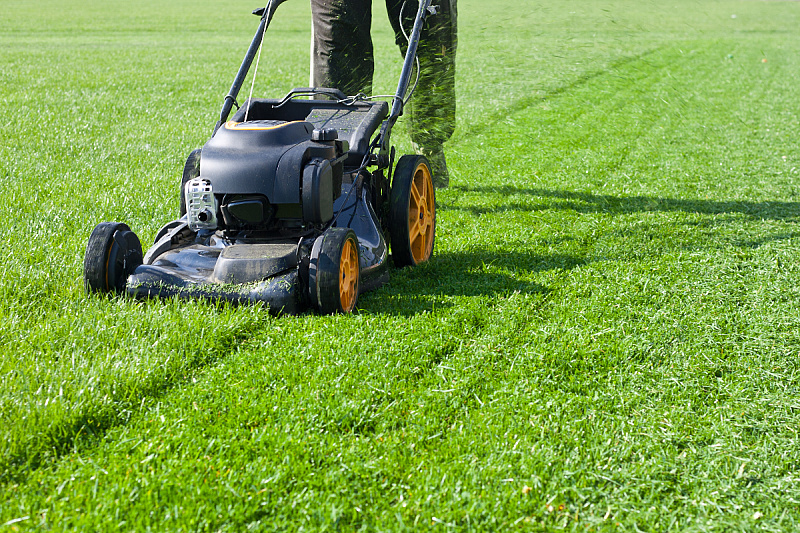
In practice, this means that if the grass has grown, for example, to 9 centimeters, it should be cut to a maximum of about 6 centimeters during mowing. This removes only one-third of its length, allowing the plant to retain enough leaf mass for normal photosynthesis and quick recovery. Experts emphasize that this rule significantly reduces stress on the lawn. When too much plant mass is removed at once, the grass weakens, regenerates more slowly, and becomes more susceptible to drought, diseases, and weed growth. Conversely, regular and moderate mowing contributes to a denser, more resilient, and aesthetically pleasing lawn.
It is particularly important to note that the one-third rule applies throughout the entire growing season. If the lawn has become overgrown, it is recommended to mow gradually in several sessions, spaced a few days apart, rather than cutting it back abruptly.
The correct height of your lawn depends on the type of grass and the time of year. In most cases, a healthy height for your grass is between seven and ten centimeters before the first mowing in spring.
If you have a lawn that is about three to five centimeters tall and growth has reached approximately one-third above this height, it is time for the next mowing.