Recall that just yesterday, ViK announced a full-day water supply interruption for a significant part of Sarajevo due to work on the main pipeline in Švrakin Selo and the transformer station in Hrasno. According to plan, the work was supposed to start at 8 a.m., but water in many households disappeared only around 10 a.m., which was the first indication that the "planned schedule" would have a somewhat more flexible interpretation. The reason cited for the interruption was the reconstruction of measurement and regulation equipment on the DN 500 pipeline in Sulejman ef. Musić Street, as well as work on the transformer station. Among others, Mojmilo, Alipašino Polje, Otoka, Čengić Vila, Dolac Malta, Grbavica, Marijin Dvor, Baščaršija, and numerous other neighborhoods were left without water, practically half the city. Throughout the day, ViK assured the public that everything was proceeding "according to the planned schedule," emphasizing that teams had been on-site since the morning hours, that the pipeline had been dismantled, and that the installation of a new electromagnetic flow meter would follow. They particularly highlighted the benefits of this "modern device," which they claim will enable more precise flow monitoring and more efficient fault detection, which sounds comforting, at least while you have water to follow it all. In the evening hours, a new promise followed: water began to be released at 7 p.m., with full stabilization expected within five hours. However, as midnight approaches, citizens across Sarajevo are still waiting for what was promised to finally flow from their taps—water, not another promise. An additional dimension to the whole situation was provided by international water system expert Đevad Koldžo, who openly questioned the manner in which the work was carried out. While emphasizing that measurements in the system are necessary, he warned that completely emptying the network could cause hydraulic shocks and additional damage. "The worst thing for a water supply system is to be left without water," Koldžo stated, adding that because of this, even greater losses than before the intervention could be expected after the water is turned back on. He particularly problematized the choice of technology, pointing out that there are solutions that allow for the installation of meters without interrupting the water supply, as well as the possibility of carrying out the work during nighttime hours when consumption is minimal. "So, all of this could have been done professionally, according to plan, and without depriving thousands of citizens of water. They could have, but they didn't," Koldžo conveyed. Meanwhile, the citizens of Sarajevo continue to wait. The modernization of the system is supposedly progressing, except the water, at least for now, is not keeping up with that pace.
Society
ViK promised but did not deliver: A large part of Sarajevo still without water
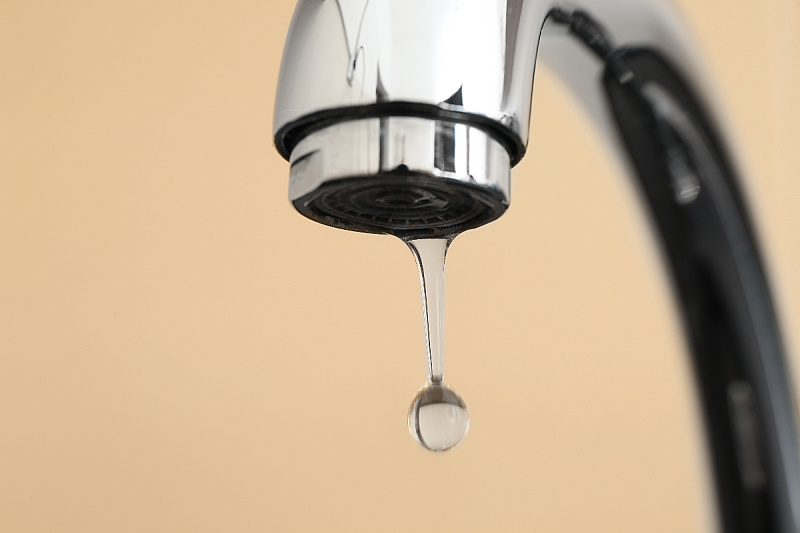
Although the Sarajevo Canton Water and Sewage Company announced that water would be restored at 7 PM and that supply would be normalized within five hours, the reality on the ground in Sarajevo appears predictably different: it is almost midnight, and a large part of the city is still without water.
ingestion