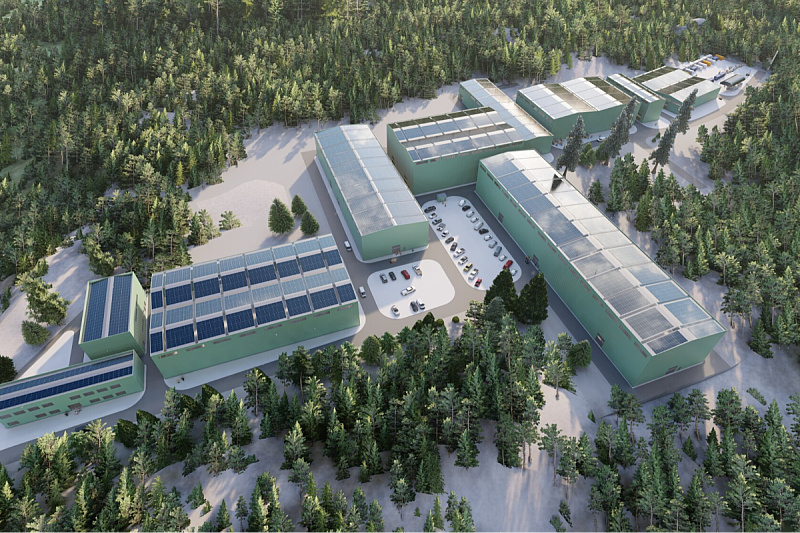
This is a multidisciplinary document covering the technological, geological, hydrogeological, energy, and environmental aspects of the planned facility, with a special focus on the specificities of the karst area of the Kupres plateau.
Key findings of the analysis
According to available data, the analysis indicates that the aluminothermic process is among the technologies already used in the industrial practice of magnesium production, with the possibility of reducing emissions compared to traditional methods, provided appropriate protective measures and continuous monitoring are applied.
Among the highlighted elements are:
Simultaneously, the analysis emphasizes that the Kupres area is hydrogeologically sensitive, making continuous groundwater monitoring essential, which is stated as standard practice for such projects.
The analysis as an informational basis
It is emphasized that the document does not constitute a regulatory act nor a substitute for an environmental impact study, but rather additional expert material that can serve as a basis for decision-making by competent institutions and the local community.
Previously, there was a decision by the Kupres Municipal Council to engage an independent expert body to analyze the project, but it was never disclosed who was engaged or whether the mentioned decision was implemented.
The new regulatory context in Kupres
In the meantime, Jan Wever, the director of BH Magnezij, also spoke out, expressing dissatisfaction with the restrictions imposed by the Kupres Municipality.
"We want to note that the municipality has the right to make its own decision, and we do not intend to interfere in that process, nor can we. We consider it important to emphasize that such decisions must be made transparently and in accordance with existing ongoing procedures. Imposing new restrictions during ongoing procedures, without clear communication and the involvement of all relevant participants, puts both competent institutions and investors in a situation of legal and procedural uncertainty, which is not common in a serious investment environment," Wever stated.
In the past period, new water protection zones have been established in the Kupres area, which could affect the possibility of project realization, as well as other activities in that area.
"To date, no one from the municipality has contacted the investor to inform them that the land owned by the company BH magnezij/minerali d.o.o. is located in a planned or existing water protection zone. Also, no official document has been received, either before or after the municipality's decision," the investor pointed out.
"This analysis was necessary so that everyone, from the local population to decision-makers, would have access to expert and relevant information. We believe that is the minimum responsibility in such a project. For months, we have watched as information was manipulated and the public was misled by presentations from people who were not experts in the field nor were they acting in the true interest of the citizens of Kupres. Kupres needs to protect its nature and simultaneously develop economic activity; otherwise, the existing demographic trends will continue, and I believe no well-intentioned person wants that," Wever added.
These decisions raise additional questions regarding the harmonization of spatial plans, environmental protection, and potential investments, which, as expected, will be the subject of further procedures and analyses.
Broader economic context
According to estimates cited in connection with the project, its eventual development could have economic effects through the supply chain, service activities, and employment. According to the economic analysis, about 103 million KM in annual operating costs remains in BiH, while the total annual impact on the domestic economy reaches about 188 million KM through the supply chain, services, and household consumption.
With more than 30 million KM in annual fiscal effects for BiH, the analysis showed that this is a project with the potential to be a significant contribution to the industrial development, employment, and public revenues of the state.
Simultaneously, the final realization will depend on several factors, including regulatory procedures, environmental impact assessments, and the attitudes of the local community and competent institutions.
Thus, the expert analysis represents one element in the broader decision-making process, which also includes the environmental, legal, and social aspects of the potential investment.
Regardless of the findings of this or any other analysis, the investor emphasizes that the magnesium production plant at this location will not be developed without the support of the local community but notes that it remains open to development at another location, which will be in accordance with the spatial plan, zones, and other regulations.
"If such an outcome indeed occurs, the loss of a multi-million investment not only for Kupres but for the whole of BiH could mean that it still sends a message to other investors and the European community that BiH is not a stable environment, ready for development and the acceptance of serious investments, not even European standards," the investor states.
The complete analysis can be found at this link.