According to the Institute, the process began back in 2015 with a public debate involving cantonal ministries, the Municipality of Novo Sarajevo, professional institutions, and certain faculties, while some members of the University of Sarajevo did not participate in the initial phase at that time.
After harmonizing the received comments, the Sarajevo City Council made a decision in 2016 to proceed with the development of the plan, which, as they emphasize, is fully aligned with applicable laws and planning documents.
The Institute highlights that the basic idea of the plan is to form an open and public urban quadrant in the very city center, with business and social facilities that should be accessible to all citizens.
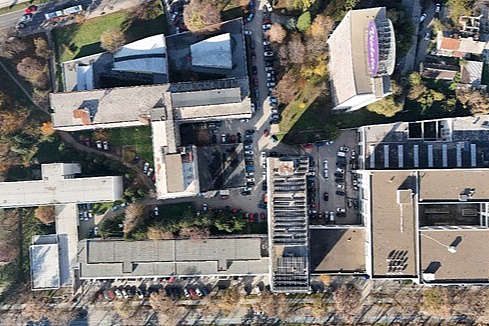
They particularly refer to the western part of the area, where educational institutions and business facilities are located, noting that this space has long been characterized by inadequate traffic access and a lack of parking.
"The current situation shows that pedestrian and green areas are being used for parking, which clearly indicates the disorganization of the space and the need for a systemic solution," the Institute points out.
They add that the planned conversion of Wilson's Promenade into a pedestrian-cyclist zone will further limit existing vehicle access, which is why it was necessary to provide alternative solutions, primarily through connection to Zmaja od Bosne Street.
In this context, the Institute states that the planned traffic route, which is the subject of criticism, is part of previously assumed obligations from planning documents and that it plays a key role in ensuring access to all facilities, including emergency vehicles.
Addressing claims about safety risks and threats to the teaching process, the Institute points out that it is overlooked that these are higher education institutions that are generally located along busy city traffic routes and that they already lack adequately resolved parking issues.
Regarding green areas, they categorically reject claims of their significant reduction, emphasizing that no new facility is planned on existing green areas and that less than 2 percent of these areas have been repurposed for traffic routes and parking.
The plan, they note, also includes the construction of a business-residential building with underground garages, which would solve the parking problem, as well as the formation of a public square of about 4,000 square meters, intended for gatherings and social events, in the immediate vicinity of Wilson's Promenade.
The Institute also emphasizes that the plan covers all necessary segments, including traffic and utility infrastructure, horticulture, and waste management, and that all aspects are elaborated in detail in accordance with applicable regulations.
Finally, they state that, despite differing opinions, the proposed solution has the potential to transform this part of Sarajevo into a functional, organized, and high-quality urban space.
"Despite the criticisms raised, we believe that the proposed plan represents a high-quality and sustainable solution for the development of the city center," concludes the Institute for Planning Development of the Sarajevo Canton.