Traffic is managed so that its population can fulfill one of the basic human functions across as large an area as possible, which is movement, walking, and pedestrian activity. This is achieved by converting roadways and parking lots into pedestrian zones and green spaces. Simultaneously, public transport and cycling infrastructure are being intensively developed. Thus, the goal is for citizens to meet their daily needs without using a car.
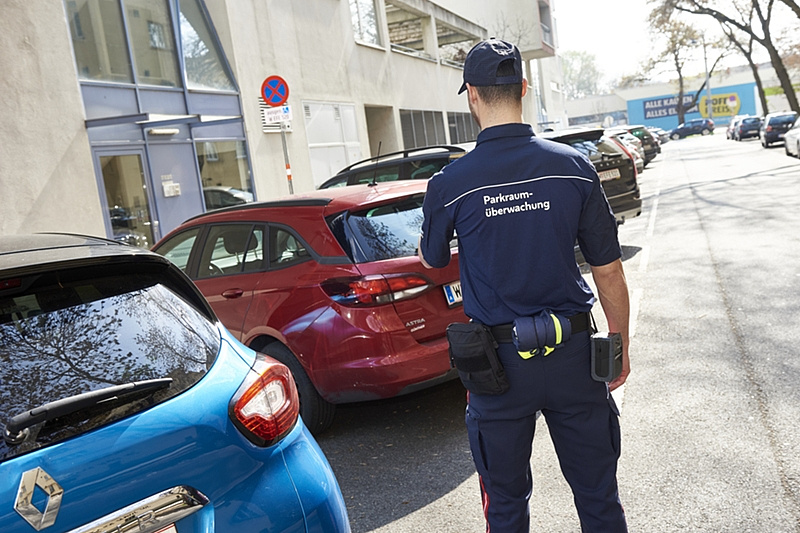
Parking Management Vienna's city services explained in more detail how they are working to achieve this goal. This primarily relates to parking management, a segment of traffic that many cities in Bosnia and Herzegovina inadequately manage.
Specifically, one of the measures aimed at making traffic as functional as possible is the online platform parken.at, which provides all information about public parking in Vienna and other Austrian cities in German and English. It includes data on parking locations, parking costs, types of parking, etc.
Among these parking facilities are Park and Ride (P+R) lots, located near public transport stops and offering more favorable rates for those who park there and use public transport.
Special parking conditions apply on public parking lots for residents of apartment buildings.
Specifically, there is a short-term parking zone throughout the city, meaning parking on public lots from Monday to Friday between 9 a.m. and 10 p.m. must be paid. In this zone, parking is limited to a maximum of two hours, requiring a parking ticket or "mobile parking" (payment via mobile phone).
On the other hand, if someone parks in the district where they live, they can park without time limits. Exceptions exist for employees and businesses. Certain commercial streets have special parking conditions, including parking duration.
For residents with parking permits in specific city municipalities, reserved parking spaces are available. Among these residents are persons with disabilities, who can park without time limits and at no additional cost.
In this city, households with more than one car are not treated specially, meaning they do not pay extra fees for having multiple cars.
We asked the authorities in the Austrian capital why they are gradually removing parking spaces.
"Public space in a densely populated city is limited. Climate change requires the transformation of public space to improve the quality of life. Therefore, it is important to optimally use existing areas and make them available for various needs. This includes reducing space for individual motorized traffic," they responded.
Thus, more space is created for outdoor stays, recreation, movement, and active mobility, which is being done under the slogan "Free us from asphalt"—removing asphalt from streets and squares and converting them into greener and more pleasant areas.
By expanding pedestrian spaces and developing cycling infrastructure, they noted, the transition to climate-neutral and active mobility is enabled.
Regarding cycling infrastructure, an additional 12.5 kilometers of paths and lanes will be built this year. Over the past five years, 190 million euros have been invested in this infrastructure.
Use of Parking Revenue Last year, Vienna generated 177.6 million euros in revenue from parking fees, though this is likely not the final amount as the final financial report has not yet been approved.
This revenue is used for road maintenance and acquiring traffic monitoring equipment, while revenue from parking fines is used as aid for socially vulnerable individuals.
Public transport is the first choice for many living in Vienna, with almost two-thirds of the population of this two-million-strong city never or rarely using a car.
This speaks to the quality of public transport, just as the fact that the municipal public transport company Wiener Linien finances 60% of its costs from its own revenues also indicates quality.
The development of public transport is one of the fundamental measures to discourage car use. This includes having one of the largest tram networks in the world, adaptive traffic light management, and special lanes for buses and trams.
Given that building an underground railway (metro) is very expensive, businesses pay a special tax to finance metro construction. It is costly but highly significant.
"By extending the U2 metro line and introducing the U5 line, space is created for an additional 300 million passengers annually, relieving other lines and enabling new transfers," Vienna's city services pointed out.
The "15-Minute City" Concept This is one of the cities developing according to the "15-minute city" concept, meaning the population can meet their daily needs within a 15-minute walk from their residence. This is a polycentric urban structure that has been developing since 1984.
As they explained, it involves a network of cycling and accessible pedestrian paths, good public transport accessibility, appropriate ground-level zones with mixed uses such as shops, and attractively designed and functional public spaces.
Examples highlighted include new urban development projects: Seestadt Aspern, Sonnwendviertel, and Nordbahnhof (North Railway Station).
The Issue of Road Construction Many, predominantly drivers, believe that building new roads reduces traffic congestion.
Accordingly, we asked the authorities in Vienna about their experiences with building new roads—whether congestion decreased or induced demand occurred, meaning car traffic increased further.
"Some main city streets were built in the 1970s, and car traffic from residential areas was redirected to these streets. This was done alongside traffic calming measures. Additionally, intensive development of public transport has significantly reduced car use in urban traffic and noticeably decreased congestion," they emphasized.
While cars accounted for 40% of all trips in Vienna in 1970, today the share of this mode of transport in city trips is, they claim, 25%.
The fact that there is more car traffic in some places than before is, they noted, a result of the significant increase in Vienna's population. Compared to other Austrian cities, Vienna still has the lowest density of private cars per thousand inhabitants.
Public Reaction They also reflected on how the population reacts to measures discouraging car use.
Specifically, they noted that it depends on different preferences and life situations, but Viennese residents, they assure, generally support traffic calming measures.
They support this claim by referencing data from a 2023 survey, according to which over two-thirds of surveyed citizens supported traffic calming, fewer parking spaces, and more green areas.
In that survey, public transport was rated 4.5, while pedestrian spaces and the cycling network received good ratings. As they concluded, the city's good infrastructure is reflected in the statement: "In Vienna, one can live quite well without a personal car," with which 87% of respondents agreed.