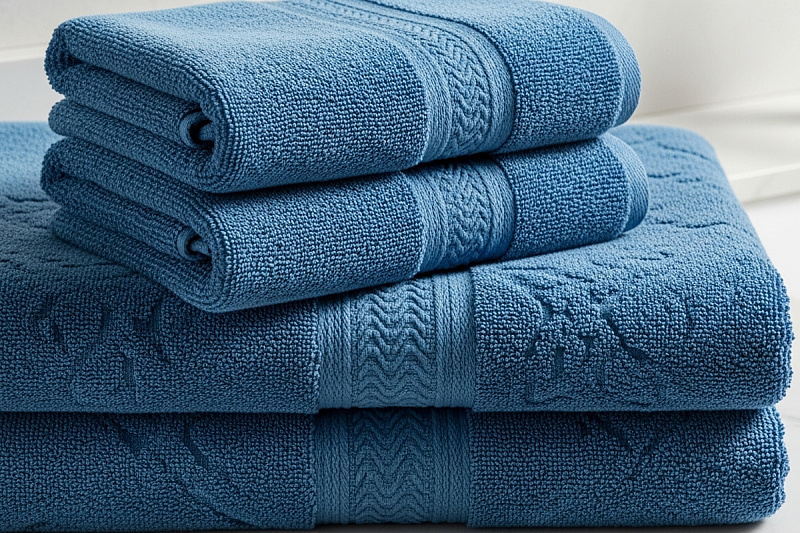
These lines have become standard in the industry and are also present in luxury brands. The dobby border looks like a simple design detail that has grown on customers over time, becoming a common element on most towels. However, besides aesthetics, it also has a practical function, according to Good Housekeeping.
As explained by Emma Seymour, assistant director of the Textile, Paper, and Apparel Lab at the Good Housekeeping Institute, it is a special edge that contributes to stability. She states:
"It's a dobby border, common on many towels. It helps the towel maintain its shape because it provides more structure than if the entire surface were just terry."
The dobby border is a woven strip placed near the ends of towels. It can be made as one wider or several narrower lines, but it is always located at the edges. According to Seymour's experience, testers often like the look of this edge, but most do not consider its absence a serious flaw:
"Testers usually like the look of the border, but most don't comment if a towel doesn't have a dobby border," she points out, suggesting that this detail is not decisive for most customers.
A towel without a dobby border will still absorb water well, as that is its basic function. However, it may have somewhat lower durability and a shorter lifespan compared to models with this finishing. The dobby border helps the towel deform less and makes the edges less prone to fraying, which in practice means a neater appearance after numerous washes.