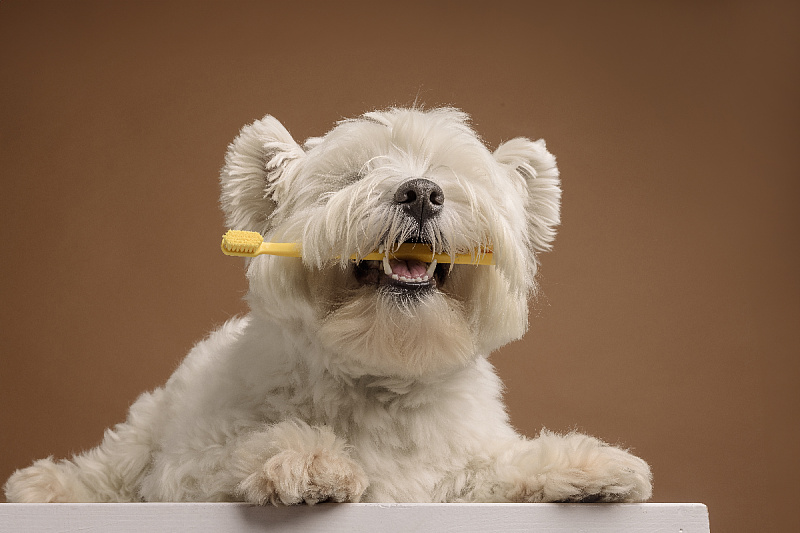
One of the first signs of dental problems in dogs is often bad breath. While a mild mouth odor is normal, a strong and intense smell can indicate a buildup of tartar or the development of gum disease. Plaque that accumulates on teeth over time hardens into tartar, which further worsens the unpleasant odor.
Changes in eating habits can also be an important signal. A dog that normally eats eagerly may start avoiding food, eating more slowly, or chewing only on one side of the mouth. Some dogs refuse hard food or treats because chewing becomes painful, and sometimes they pick up food only to drop it.
Red, swollen, or bleeding gums are a common sign of inflammation, known as gingivitis. If left untreated, the inflammation can progress into a more serious disease that damages the tissue and bone around the teeth, which can lead to loose or lost teeth.
Increased drooling can also indicate problems in the oral cavity, and sometimes traces of blood may be noticed in the saliva. Dogs experiencing mouth pain may paw at their mouths or rub their snouts against the floor and furniture, trying to relieve discomfort.
Visible changes in the teeth, such as yellowish or brown deposits, broken or loose teeth, and receding gums, are clear indicators of dental issues. In more severe cases, dental problems can also affect a dog's behavior, making them irritable, withdrawn, or less interested in play.
Untreated dental diseases don't just affect the mouth. Infections can travel through the bloodstream to other organs, increasing the risk of heart, liver, or kidney problems. Regular oral hygiene, check-ups, and teeth cleaning are crucial for maintaining a dog's health.