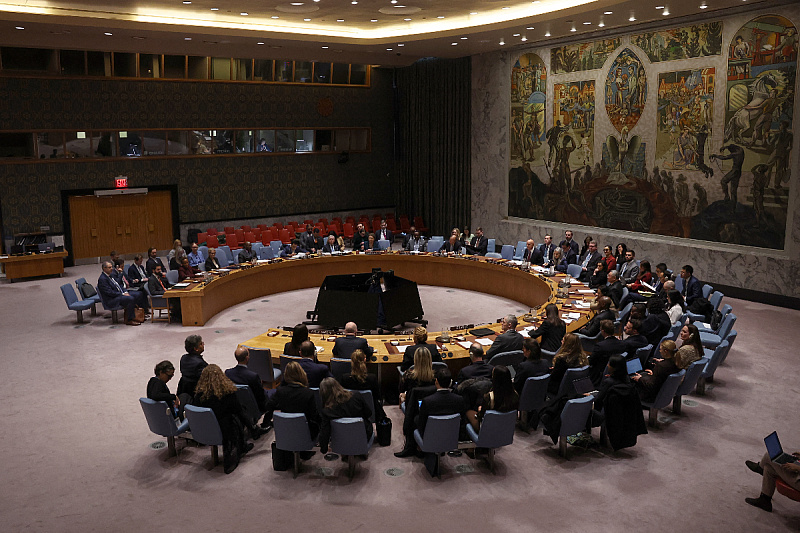
According to their statements, a meeting of the 15 members of the Security Council is scheduled for Saturday morning, after an earlier plan to vote on Friday was postponed due to a United Nations holiday.
Oil prices have surged sharply since the United States and Israel carried out attacks on Iran at the end of February, sparking a conflict that has lasted over a month and effectively closed one of the world's key maritime routes.
Diplomats note that Bahrain, which currently presides over the Security Council, has finalized a draft resolution that calls for the use of "all necessary defensive measures" to protect commercial shipping. However, China has clearly expressed its opposition to any authorization of the use of force.
Chinese Ambassador to the UN Fu Cong warned that such a decision would mean "legalizing the unlawful and indiscriminate use of force," which he stated would inevitably lead to further escalation and serious consequences.
The draft resolution was placed under the so-called silence procedure, but according to diplomatic sources, China, France, and Russia broke that procedure. Despite this, the text was later finalized, meaning it can proceed to a vote.
Adoption of the resolution requires at least nine votes in favor, provided that none of the five permanent members—the United Kingdom, China, France, Russia, and the United States—veto it.
Bahrain's Foreign Minister Abdullatif bin Rashid Al Zayani assessed that Iran's attempts to control international shipping through the Strait of Hormuz pose a threat to global interests and demand a "decisive response."
The Arab League also expressed support for Bahrain's initiative, with its Secretary-General Ahmed Aboul Gheit stating that the organization stands behind efforts to adopt the resolution.
Simultaneously, on Thursday, the United Kingdom hosted a meeting with over 40 countries dedicated to efforts to reopen and secure safe navigation through the Strait of Hormuz, while supporting Bahrain's proposal.
A day earlier, U.S. President Donald Trump announced the continuation of attacks but without a concrete plan to reopen the strait, further fueling the rise in oil prices and concerns in the global market.