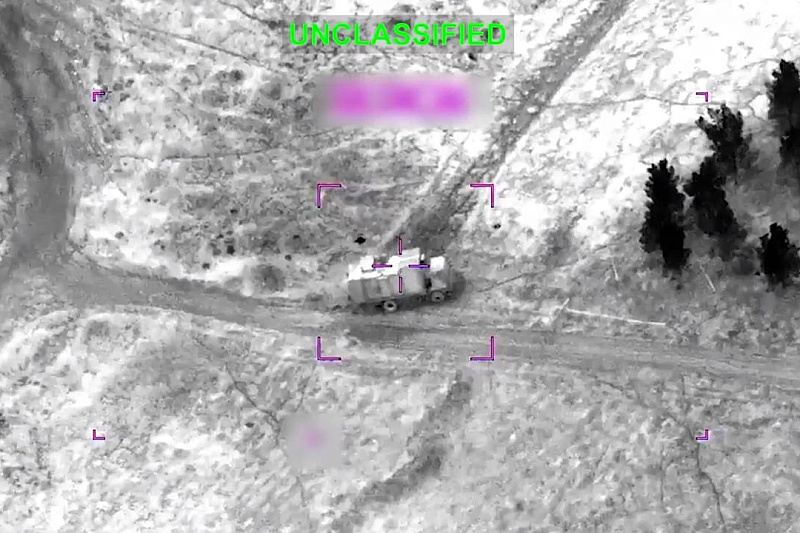
According to estimates from U.S. intelligence agencies cited by The New York Times and CNN, new findings call into question the Pentagon's claims that Tehran's missile capabilities were "largely degraded" after five weeks of war.
Reports indicate that Iran has also retained a significant number of its missiles and mobile launch platforms.
Although U.S. intelligence agencies have not assessed the number of remaining launch platforms with high confidence, Iran still maintains the capability to use its remaining arsenal of ballistic missiles and launch systems to attack Israel and other countries in the region, according to U.S. officials familiar with the intelligence.
U.S. intelligence reports describe a pattern where underground bunkers, caves, or silos appear damaged after strikes but quickly return to operational status. Iranian teams have used bulldozers to excavate missile launchers that were buried or "plugged" by airstrikes, Haaretz reported.
The launch platforms are then relocated and used to fire missiles again.
Iran also deploys a significant number of decoys, complicating accurate assessments of its actual capabilities.
The United States is uncertain how many of the seemingly destroyed launch platforms were actually functional. Estimates of Iran's pre-war launch systems themselves were not precise.
U.S. intelligence agencies believe Iran is intentionally conserving its remaining launchers by keeping them in bunkers and caves, preserving the ability to maintain pressure if the war continues or to threaten the region after its conclusion. The gap between the administration's public statements and classified assessments is becoming increasingly pronounced.
"The facts are these: Iranian ballistic missile and drone attacks have been reduced by 90%, their navy is destroyed, two-thirds of production capacity is damaged or destroyed, and the United States and Israel have complete air superiority over Iran," stated White House spokesperson Anna Kelly.
Defense Secretary Pete Hegseth emphasized the decline in Iran's missile launch rate.
"Yes, they will still fire some missiles, but we will shoot them down. Significantly, in the last 24 hours, Iran has launched the smallest number of missiles and drones. They will go underground, but we will find them," Hegseth said on Monday.
However, intelligence reports suggest the reduced launch tempo reflects an Iranian strategy, not destroyed capabilities.
Three sources familiar with the assessments told CNN that Iran's remaining forces are "still capable of causing absolute chaos across the entire region."
Despite claims of degradation, Iran has continued to attack Israel with approximately 20 missiles per day, firing one or two at a time, according to current and former U.S. officials.
One Western official said on Friday that Iran launches 15 to 30 ballistic missiles and 50 to 100 drones for a single attack daily. Former officials said internal divisions within the Iranian government complicate command and control following the assassinations of senior leaders, making it difficult for Tehran to launch large, coordinated salvos. But the sustained daily tempo demonstrates a continuity of capability.
Coastal Defenses and Drone Arsenal Largely Intact CNN reported that approximately half of Iran's drone capacity, numbering in the thousands, remains intact. Many of Iran's coastal defense cruise missiles have not been significantly degraded, aligning with the U.S. strategy of not prioritizing coastal military infrastructure, although some maritime targets have been hit.
These coastal missiles represent key assets enabling Iran to threaten shipping traffic through the Strait of Hormuz, which Tehran has effectively controlled since the war began.
Secretary of State Marco Rubio highlighted the "significant reduction" in Iran's missile launch capability as a key war objective. As of Wednesday, U.S. Central Command confirmed that U.S. forces have struck over 12,300 targets within Iran since the start of Operation Epic Fury on February 28.
U.S. and Israeli attacks have killed more than 1,340 people, including then-Supreme Leader Ali Khamenei and Ali Larijani, who headed Iran's National Security Council.
Despite these losses, intelligence indicates Iran still possesses a significant missile arsenal along with remaining launch infrastructure.