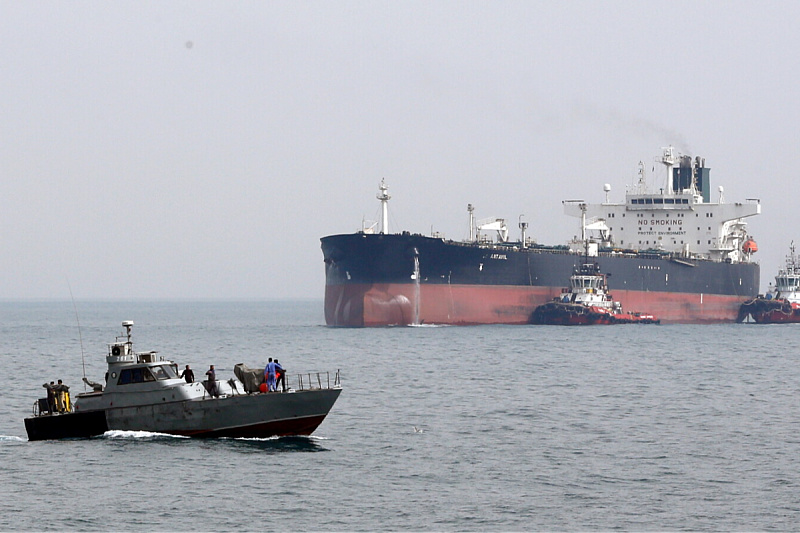
While the United States has decimated Iran's regular navy, sinking over 155 vessels, ships controlled by the IRGC remain largely operational and capable of controlling the key shipping lane that President Donald Trump has pledged to reopen, reported The Wall Street Journal. The IRGC navy is numerous, small, and fast, allowing its attack craft to evade satellite detection and hide in underground shelters along the rocky coast of the approximately 20-mile-wide (36 km) strait, said Chris Long, a former British naval official in the Persian Gulf. "It will take a long time for the U.S. to destroy all of that," Long told the WSJ. The formation of this fleet is a direct result of the so-called Tanker War of the 1980s, when the U.S. sank a large portion of Iran's then-active fleet in a one-day attack. Since then, the Islamic Republic has turned to an asymmetric navy, with the IRGC tasked with controlling the Strait of Hormuz, while the conventional navy patrols other Gulf waters. Iran previously demonstrated fast boats during live-fire military exercises in February, as a show of force against U.S. naval buildup in the Middle East before the war began. The vessels were shown to be armed with rocket launchers and capable of laying mines in the strait, able to achieve high speeds while entering and exiting their underground shelters. This strategy appears to have paid off for Tehran, given the IRGC's survival rate compared to the conventional navy, which U.S. officials claimed was completely destroyed in the first three weeks of the war. Meanwhile, the IRGC navy has managed to effectively close the Strait of Hormuz using underwater mines and drone attacks, halting a key trade route through which 20% of the world's oil passes. At least 50 attacks have been carried out on commercial ships in the Gulf and the Strait of Hormuz since the war began, according to data from the Armed Conflict Location and Event Data Project. "Their asymmetric strategy is working," said David Des Roches, former director for Persian Gulf policy at the U.S. Department of Defense, to the WSJ. Trump said on Sunday that the U.S. and its allies will deploy minesweepers and destroyers to open the Strait of Hormuz for more than 2,000 ships stuck in the Gulf.
Society
Most of the Revolutionary Guard's fast attack boats are active and patrolling the Strait of Hormuz.
More than 60 percent of the Islamic Revolutionary Guard Corps' fast-attack boats tasked with patrolling the Strait of Hormuz remain intact despite six weeks of U.S.-Israeli airstrikes on the Iranian navy, a new report states.
ingestion