According to official data, this represents a significant increase compared to the 2022 elections, when turnout at the same time was 62.92 percent. Moreover, the previous record of 73.51 percent from 2002 has already been surpassed, even though there was more than an hour left until polling stations closed. Political analyst Gábor Török estimates that the final turnout could reach as high as 80 percent. However, high turnout does not necessarily benefit one political option. Analysts warn that it could negatively impact the far-right party Our Homeland, as well as smaller parties that need at least five percent of the votes to enter parliament. From the opposition party Tisza, led by Péter Magyar, they convey that high turnout favors the opposition, while leaders from both the government and the opposition are urging citizens to go to the polls before they close at 7 p.m. Prime Minister Viktor Orbán posted a message on social media: "Many people are voting. That means only one thing. If we want to protect Hungary’s security, no patriot should stay at home!" On the other hand, Magyar called for additional voter mobilization: "Now we must give it our all! Vote and encourage everyone to do so. Every vote can be decisive!" Zsolt Hegedűs, a health policy expert chosen by Magyar as a key collaborator, also believes that high turnout could benefit the opposition. Earlier today, he stated that the campaign’s message was clear—every vote matters and everyone should go to the polls. "That is absolutely good news for the opposition," said Hegedűs, expressing hope that a two-thirds majority could also be achieved. Speaking about priorities, Hegedűs highlighted that Hungarian citizens have long pointed out the poor state of the healthcare system, which he described as neglected and underfunded, with a significant outflow of medical personnel abroad. He added that even with a simple parliamentary majority, certain changes would be possible, particularly through a different approach to healthcare management. "The Hungarian system lacks honesty, transparency, and professionalism," said Hegedűs. He emphasized that a potential two-thirds majority would further facilitate reforms. "With a more stable government, it would be much easier to show initial results and reduce pressure on the healthcare system," he concluded.
Society
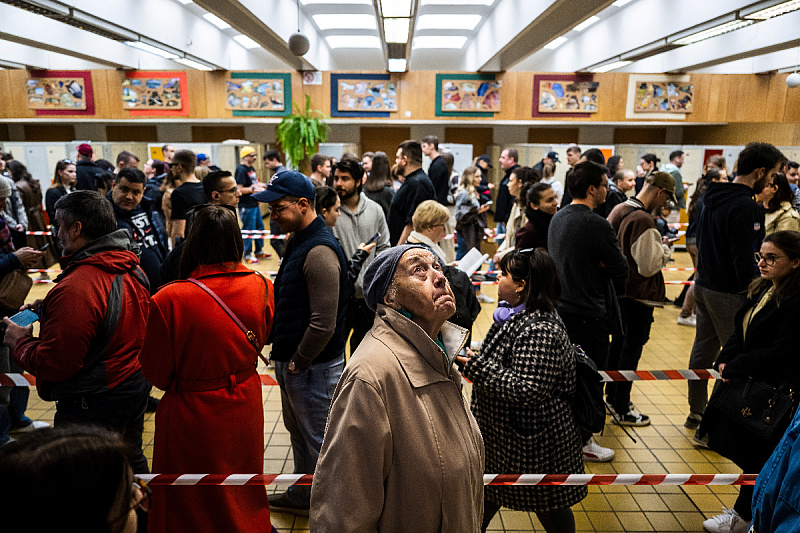
In Hungary, record turnout, more than 74 percent of voters cast ballots: Both the government and the opposition claim it favors them.
Voter turnout in the Hungarian parliamentary elections reached 74.23 percent by 5 p.m., already surpassing the previous record for elections in the country.
ingestion