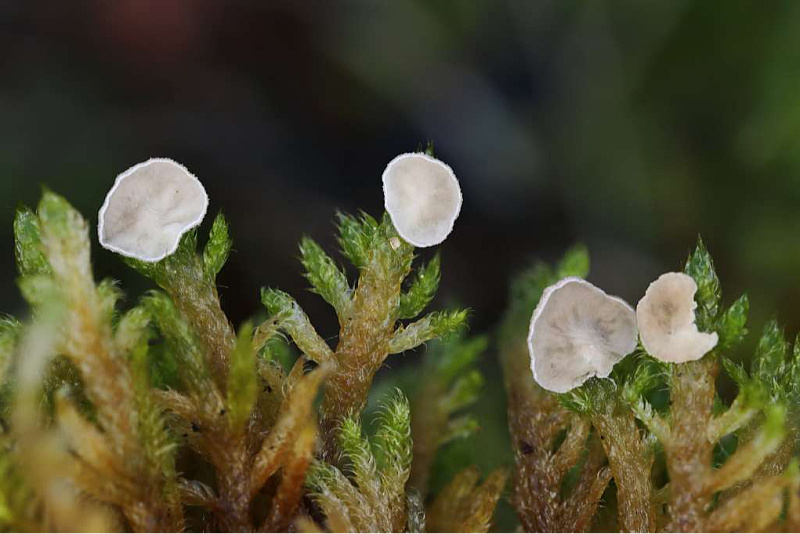
Particular attention is drawn to the discovery of Pseudombrophila fuscolilacina, a globally rare fungus previously known only from a few European countries—France, Italy, and Spain. Its discovery in Blagaj, specifically on goat dung near the Stjepangrad fortress, marks the first recorded find not only in Bosnia and Herzegovina but also in the Balkans, as announced on Wednesday by the youth club "Novi Val" Blagaj. This species belongs to the so-called fimicolous fungi, which play a key role in decomposing organic matter and maintaining the natural balance of ecosystems.
Equally significant is the first official record of Rutstroemia tiliacea in Bosnia and Herzegovina. This rare European species, previously documented in countries such as Germany, Sweden, and the United Kingdom, was found on dead pine branches near the Stjepangrad fortress. Its presence further confirms the ecological value and preservation of the forest habitats in this area.
Furthermore, research confirmed the presence of Clarireedia calopus, an indicator fungus that signals healthy grassland ecosystems. This species decomposes dead grass residues and contributes to nutrient cycling in nature, making it an important part of the ecological system.
Additionally, Smardaea planchonis was recorded, a species characteristic of Mediterranean maquis communities. Although previously known in Herzegovina, its presence further confirms the continuity and stability of these specific habitats. This species has previously been proposed as vulnerable (VU) according to international nature conservation criteria.
"Novi Val" emphasizes that these findings are not just a scientific sensation but also strong evidence that Blagaj and the wider Herzegovina region harbor an exceptionally rich and still insufficiently explored world of biodiversity. At the same time, they send a clear message about the urgent need for systematic protection of these areas, which are under increasing pressure from various forms of degradation.
In the upcoming period, additional biological research is planned as part of the project "Expert Justification for the Designation of the Protected Area of the Buna and Bunica Rivers," implemented by the Youth Club Novi Val Blagaj. Also, in the forthcoming period, experts from the MycoBiH team will conduct further research in the area of Blagaj and the Buna River.
These studies will further illuminate the richness of fungi and overall biodiversity, providing a solid scientific basis for the long-term protection of the Buna and Bunica rivers in this exceptional area.
"Such results confirm that Bosnia and Herzegovina has enormous, yet underexplored natural potential. Each new discovery is another argument for preserving our rivers, forests, and habitats," the researchers convey.