At a gathering held on April 9, organized by the Presidency for Communications and the SETA Foundation, Yaşar Güler criticized the European Union for its reluctance to fully open its defense initiatives to Turkey. He reminded that Turkey is a member of NATO but not of the European Union, which, he emphasized, results in two different sets of rules in practice that limit cooperation with EU member states. "Otherwise, we assess that such an approach by the European Union would cause more harm to European security and resilience than the reduction of American forces in Europe," said Güler, warning of the consequences of defense projects that marginalize non-EU allies like Turkey. He also conveyed that Turkey is no longer a peripheral NATO state on the southeastern flank. As he noted, it is a central ally capable of generating security across the entire European theater. Güler's messages, delivered ahead of the 2026 NATO summit in Ankara this summer, were presented as reflecting Turkey's view of its own role in the alliance and its assessment of the rapidly changing international security environment. The minister announced that Turkey will take command of the NATO Allied Rapid Reaction Corps from 2028 to 2030. According to the assessment of Serhat Güvenç, a professor of international relations at Kadir Has University in Istanbul, "Turkey has become one of the few NATO allies capable of contributing across multiple operational domains on a significant scale." Güvenç believes that countries on NATO's eastern flank, including Poland, Romania, the Baltic states, and Nordic allies, increasingly recognize Turkey's value as Europe seeks to strengthen deterrence against Russia while managing instability in the south. Ankara, on the other hand, emphasizes in its engagements with European partners that it can offer a large standing army, significant combat experience, a geographical location between Europe and the Middle East, and a defense industry capable of rapidly producing drones, ammunition, armored vehicles, and naval platforms. According to Ankara's interpretation, the focus on Europe does not stem solely from a desire for recognition or influence. Under conditions of complex threats, it is believed that a weakened NATO or a fragmented European defense architecture could leave Turkey more strategically exposed in a period of growing regional instability. Retired Brigadier General Hüseyin Fazla, president of the Ankara-based think tank STRASAM and a former Turkish Air Force pilot, assessed that Turkey's operational contributions and its defense industry capacity have strengthened the arguments for deeper integration into European defense planning. "In recent years, the progress Turkey has made in its defense industry is forcing European capitals to cooperate with Ankara," said Fazla. He added that contributions in military technology through formal defense planning processes within the alliance have been visible enough to be acknowledged even by high-ranking NATO commanders. However, Turkey's defense integration through EU channels faces significant political obstacles. Fazla points out that the PESCO framework and the multi-billion-euro European Defense Fund operate on the principle of unanimity, giving Greece and the administration of Greek Cypriots veto power over Turkish participation. "Greece and Cyprus do not perceive Turkey's integration into the European defense architecture as a contribution to their own security, but as a collapse of their strategy of balancing Turkey within the EU," said Fazla. He cites political culture as an additional obstacle, as much of Western Europe, particularly France and Germany, resists formally recognizing Turkey as a central strategic partner.
Society
Turkey warns NATO: Excluding Turkey from defense initiatives is more dangerous than the U.S. withdrawal.
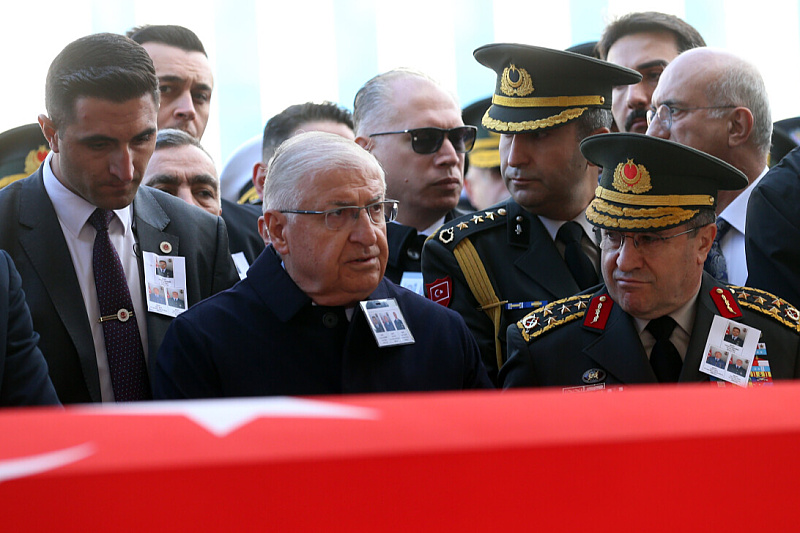
Turkish Defense Minister Yaşar Güler used the conference marking the 74th anniversary of NATO membership to convey that excluding Ankara from European defense initiatives could harm Europe's security more than reducing the American presence on the continent.
ingestion