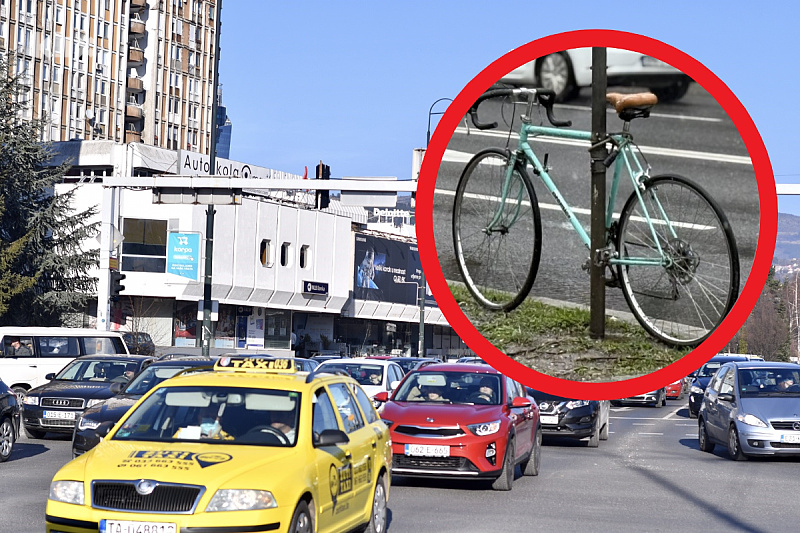
Fuel prices have been straining household budgets for weeks, yet citizens' daily habits remain largely unchanged. Many rely on public transportation, but few opt for other, more economical, practical, and healthier alternatives. Car queues continue to fill city streets, parking is scarce as ever, and alternative modes of transport only sporadically attract attention. Only an occasional citizen pedals a bicycle, while slightly more are on electric scooters—perhaps because it's easier to twist a wrist than to "pedal."
The symbolic image of an abandoned bicycle, forgotten by the roadside, perhaps best illustrates our attitude toward change. Although cycling offers a more economical and environmentally friendly option, most still perceive it merely as a recreational solution rather than a real alternative.
The reasons for this are numerous. Insufficient infrastructure, such as bike lanes, traffic insecurity, and deeply ingrained habits make transitioning to different modes of movement difficult. The car remains a symbol of comfort and a necessity in daily life.
Those who want and are willing will adapt despite visible shortcomings. However, when it comes to the widespread adoption of cycling and developing that culture, it seems unlikely we'll embrace it. Few here still believe in the proverb "a healthy mind in a healthy body." That part constantly eludes our radar, but not the Dutch, Danes, Germans, and most of Europe.
Nevertheless, the question that increasingly arises is: "How long can we ignore reality?" In conditions of constant rising costs, especially fuel, adaptation no longer seems like a choice but a necessity. And not only that—traffic jams during morning and afternoon hours remain a source of daily stress. It seems fuel could cost even 10 KM per liter, yet the habits and comfort provided by driving cars persist.
Perhaps the image of a left-behind bicycle on one of Sarajevo's busiest streets is not a true sign of disinterest in change. It likely isn't a reminder of a missed opportunity either, but rather of our familiar tendency to adapt only when we're "burned to the bone."