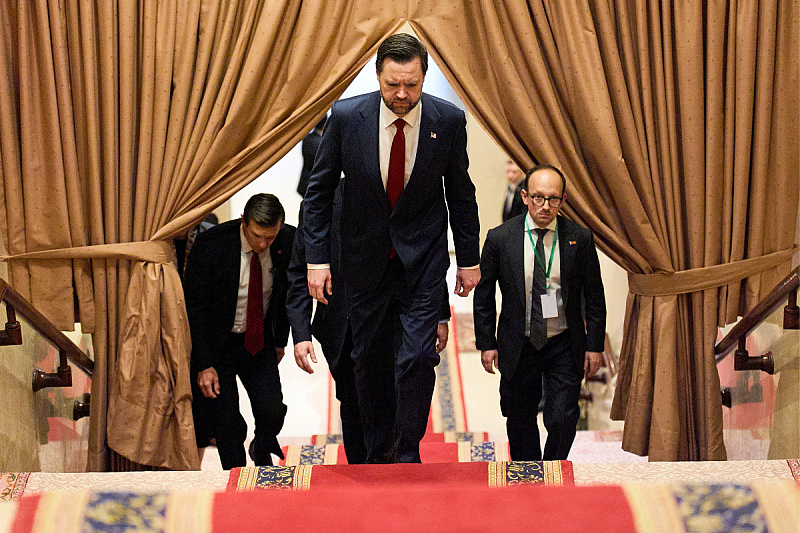
Mohammad Bagher Ghalibaf, the speaker of Iran's parliament and an influential military commander, led the Iranian delegation and met face-to-face with U.S. Vice President JD Vance. The two shook hands, and the talks were described as cordial and calm, according to two senior Iranian officials familiar with the discussions.
Although no diplomatic breakthrough was achieved, one taboo, shaped by decades of hostility, sharp rhetoric, and chants of "death to America" in Iran, has now been broken. The meeting between Vance and Ghalibaf was the highest-level face-to-face encounter between representatives of Iran and the United States since diplomatic relations were severed in 1979 following the Islamic Revolution. Soon after, Iran's new rulers stormed the U.S. embassy and took American diplomats hostage.
"These are the most serious and longest direct talks between the U.S. and Iran, and they reflect the intention of both sides to end this war," said Vali Nasr, a professor and Iran expert at Johns Hopkins University.
After the talks failed, JD Vance said the Americans had presented their best offer and that Iran had not accepted it. "We clearly laid out what our red lines are, in which areas we are willing to accommodate them, and in which areas we are not," Vice President JD Vance said.
Vance did not specify what those red lines were. In the days leading up to the talks, both sides made public statements, suggesting they remain far apart on several critical issues. They could not even agree on whether the two-week ceasefire they reached on Tuesday applied to the fighting in Lebanon, a dispute that nearly derailed the meeting.
As of Sunday morning, three main points of contention remained, according to two Iranian officials familiar with the talks: the reopening of the Strait of Hormuz, the fate of nearly 900 pounds of highly enriched uranium, and Iran's demand for the release of about $27 billion in frozen revenues held abroad.
The United States demanded that Iran immediately reopen the strait to all maritime traffic. However, Iran refused to relinquish leverage over this critical chokepoint for oil tankers, saying it would only do so after a final peace agreement, according to two Iranian officials who spoke on condition of anonymity to discuss sensitive diplomatic negotiations.
Iran also sought compensation for six weeks of airstrike damages and demanded that frozen oil revenues held in Iraq, Luxembourg, Bahrain, Japan, Qatar, Turkey, and Germany be released for reconstruction, the officials said. The Americans rejected these demands.
Another point of contention was President Trump's demand that Iran surrender or sell its entire stockpile of enriched uranium, which is nearly weapons-grade. Iran made a counterproposal, but the sides failed to reach a compromise, the officials said.