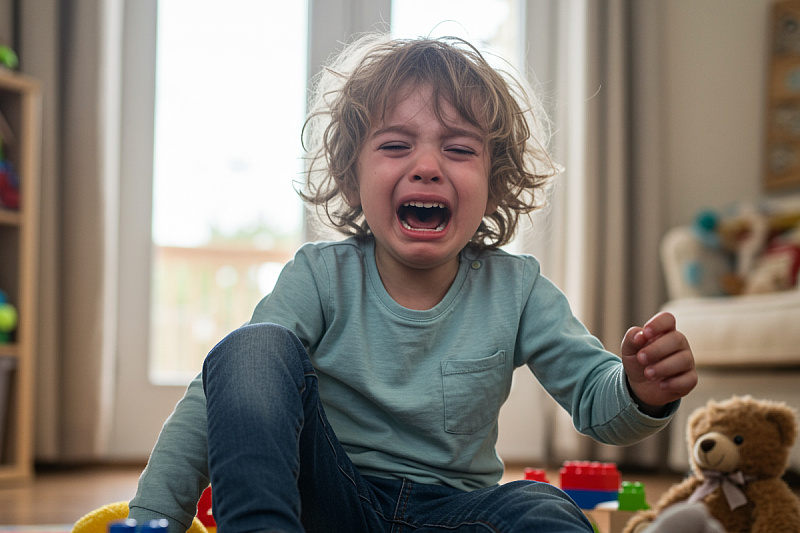
This is a process in which a child expresses overwhelming emotions that they do not yet know how to regulate or communicate appropriately. How can you help them? Have you ever wondered why tantrums occur in children? Below, we present a series of possible reasons why little ones may have outbursts of anger.
Neuropsychological Development In young children, the parts of the brain that control impulses, self-control, and emotional regulation (the prefrontal cortex) are not yet fully developed. Therefore, when they experience strong emotions, they respond with a complete release of emotions or anger.
Communication Limitations Children often cannot clearly express their needs or feelings with words. When they are hungry, tired, frustrated, or want something they cannot have, anger is a natural way for them to try to verbalize their feelings.
A large part of this period, the child communicates through their body, in a physical way, because they actually have no other tools. The predominant behavior is that the child goes somewhere, takes something, shows it, and through crying and agitation wants to convey that they need something, that they want something, and even such outbursts are considered normal child behavior.
As children begin to develop a sense of independence, they want more control over their environment, which can lead to internal conflicts and frustration when their desires are not met.
Physical Factors and Routines Fatigue, hunger, excessive external stimulation, or sudden changes in routine can increase the likelihood of tantrums.