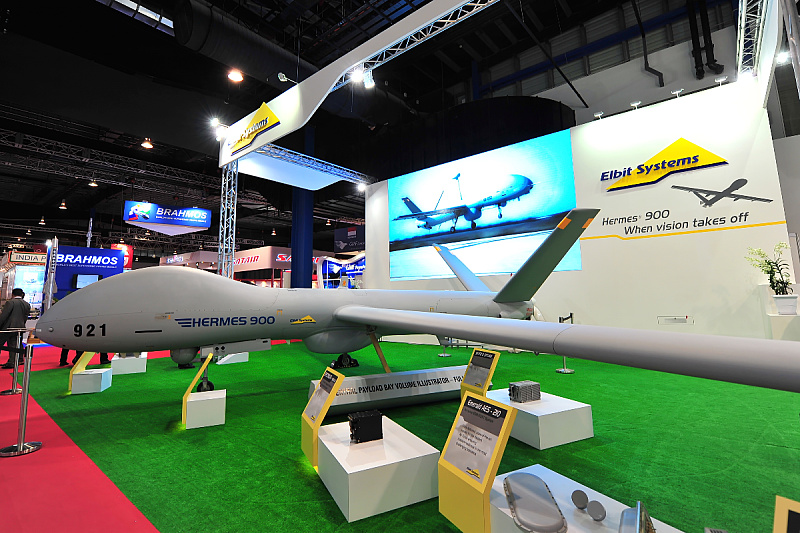
Elbit Systems and SDPR plan to produce two types of unmanned aerial vehicles at this facility: short-range armed drones and long-range unmanned aerial vehicles, according to official documents obtained by BIRN and Haaretz, as well as conversations with two independent sources.
The documents show that Elbit will hold a 51 percent stake in this venture. The new partnership elevates defense ties between Serbia and Israel to a higher level. Over the past two years, Serbian arms exports to Israel have increased 42-fold, reaching 114 million euros (410 million shekels) in 2025. The majority of exports to Israel are carried out by SDPR.
As reported by Haaretz and BIRN last August, arms exports continued despite a statement by the Serbian president about halting all defense exports from the country.
Haaretz's monitoring shows that exports from Serbia intensified after the outbreak of the 2023 war with Hamas and Hezbollah. In the context of ammunition shortages during the war, arms shipments from Belgrade to the Israeli Nevatim airbase significantly increased within two years via an air bridge.
According to Vuk Vuksanović, a foreign policy lecturer in the Department of War Studies at King's College London, Serbia could gain economic and technological benefits from the drone partnership, gaining access to the expertise of Elbit as one of the world's most advanced arms manufacturers.
For Israel, this venture helps secure a production and supply chain outside the country "in a constant state of conflict."
Geopolitically, Serbian leadership sees Israel as a "shortcut to the White House" at a time when Vučić and his party are facing declining popularity after 14 years in power.
"Their main priority is to stay in power, and the best way to do that is not to anger the Americans, especially given President Donald Trump's moves on the global stage," said Vuksanović.
SDPR did not respond to questions. Elbit stated that it "has no comment."
The drone factory will be located in the Šimanovci industrial zone, about 30 kilometers west of Belgrade. Plans for the project, obtained by BIRN and confirmed by two sources from the Serbian military industry, show that the facility will produce drones capable of carrying heavy payloads for short-range missions, as well as advanced long-range unmanned aerial vehicles designed to operate at altitudes of up to six kilometers.
According to one source, the new unmanned aerial vehicle will surpass the capabilities of the Serbian Pegasus model, which is produced by the domestic defense industry.
"That's the essence, because we can't achieve this on our own. The idea is to gain knowledge and technology, with the involvement of Serbian engineers in the project," the source said.
Another source added that engineers from UTVA, an aircraft manufacturer owned by SDPR, will also be involved.
According to SIPRI, a research institute that monitors global arms trade, Elbit Systems is the leading Israeli arms manufacturer. Over the past two years, the company has signed two major defense contracts with Serbia: in early 2025, Elbit sold artillery systems and advanced unmanned aerial vehicles worth $335 million.
In August, a second contract was signed for the purchase of drones, long-range missiles, and electronic warfare systems worth $1.6 billion. Elbit Systems' revenue for 2025 amounted to approximately $8 billion.