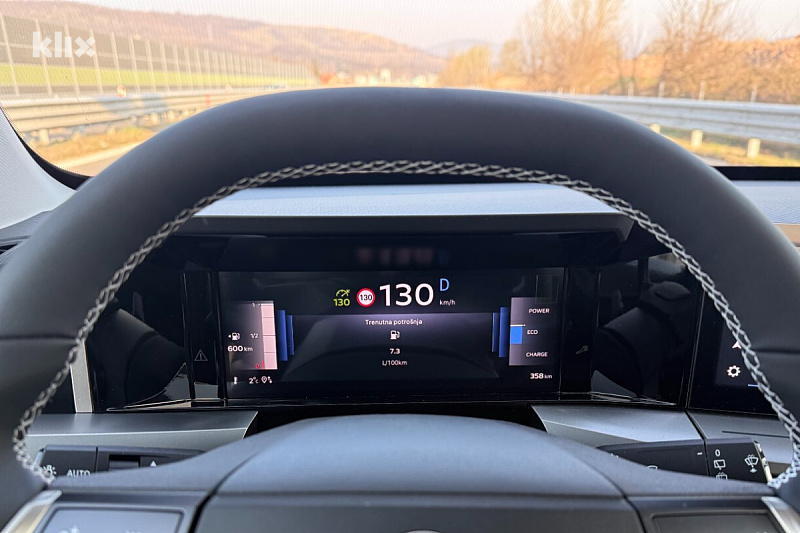
Physics is on the side of this recommendation. The air resistance a vehicle overcomes increases with the square of its speed, meaning the difference between 130 and 120 km/h is not linear. The engine crankshaft rotates at higher RPMs, and with that, fuel consumption also rises.
According to expert estimates, driving at 120 instead of 130 km/h can reduce consumption by up to 10 to 15 percent, depending on the type of vehicle, weather conditions, and road state. This particularly applies to Euro 6 diesel vehicles, which additionally consume AdBlue fluid, thus costing the owner more per kilometer.
In practice, for an average vehicle consuming about 7 liters of fuel per 100 kilometers at 130 km/h, switching to 120 km/h could lower consumption to around 6 to 6.3 liters. On a 500-kilometer journey, this means a saving of four to five liters—which, at current fuel prices where gasoline has already exceeded three BAM and diesel is approaching four BAM—is not negligible.
Of course, savings depend on a range of factors. Air conditioning, number of passengers, altitude, terrain profile, and vehicle age. All of these affect the final result. But the general conclusion remains: a constant, more moderate speed almost always means less fuel and less strain on the wallet.
Along with reducing speed, similar effects are achieved by gentle acceleration instead of sudden "starts," maintaining a steady pace without unnecessary braking, and sharing the ride with other passengers. Each of these steps individually brings modest savings, but together they can make a difference, both at the pump and in the wallet.
At a time when oil prices are rising due to geopolitical tensions and every country is seeking ways to protect citizens' purchasing power, precisely such measures—simple, cost-free, and immediately applicable—are gaining new significance.
Ten kilometers per hour less is not a sacrifice. It is a rational choice that pays off.