The Joint Chiefs of Staff of South Korea announced that the missiles were launched from the eastern coastal area of Wonsan and each flew approximately 240 kilometers toward the eastern waters of North Korea. They added that South Korea maintains readiness to counter any provocations from North Korea, relying on a strong military alliance with the United States. The South Korean military also reported detecting the launch of an unidentified missile from the broader area of North Korea's capital on Tuesday. They stated that South Korean and U.S. intelligence agencies are analyzing the details of that launch. South Korean media reported that an earlier missile, also likely a ballistic missile, disappeared from South Korean military radar after displaying abnormal behavior in the initial flight phase, indicating that the launch ended in failure. The consecutive launches followed North Korea's clear indication that it has no intention of improving relations with South Korea, whose liberal government persistently expresses hope for reviving long-stalled dialogue. On Tuesday evening, Jang Kum Chol, the first vice minister of foreign affairs in Pyongyang, stated that South Korea will forever remain North Korea's "most hostile enemy state." He mocked South Korea, calling it "fools who shock the world" for what he described as a futile desire to see an opportunity for improving relations in a recent statement by Kim Yo Jong, the influential sister of North Korean leader Kim Jong Un. After South Korean President Lee Jae Myung expressed regret over alleged civilian drone flights into North Korea, Kim Yo Jong praised his, as she called it, honest and courageous stance late Monday but reiterated threats of retaliation if such flights recur. South Korean officials responded by assessing that her statement represents significant progress in relations. However, Jang said her statement was intended as a warning. He noted that Kim Yo Jong criticized South Korea for recently co-sponsoring a United Nations resolution on alleged human rights violations in North Korea, calling it "mangy dogs that blindly bark in tune with neighboring dogs." North Korea refuses to return to the negotiating table with South Korea and the U.S. and seeks to expand its nuclear arsenal since talks between Kim Jong Un and then-U.S. President Donald Trump collapsed in 2019. At the ruling Workers' Party congress in February, Kim Jong Un threatened to destroy South Korea if provoked. Simultaneously, he left the door open for dialogue with Trump but called on Washington to abandon demands for North Korea's nuclear disarmament as a precondition for new talks. Earlier this week, North Korea announced that Kim Jong Un oversaw a test of an improved solid-fuel engine for weapons and called it a significant development that strengthens the country's strategic military arsenal. Solid-fuel missiles are easier to maneuver and conceal launches than liquid-fuel missiles, which typically need to be fueled immediately before launch and cannot remain ready for long. South Korea's intelligence agency told lawmakers on Monday that the engine test is likely related to efforts to develop a more powerful solid-fuel intercontinental ballistic missile capable of carrying multiple nuclear warheads, according to lawmakers who attended the meeting. Experts point out that North Korea needs missiles with multiple warheads to penetrate U.S. missile defense but doubt that the country has already mastered the technology required to develop such weapons.
Society
North Korea fired missiles toward the sea after mocking Seoul's hopes for better relations.
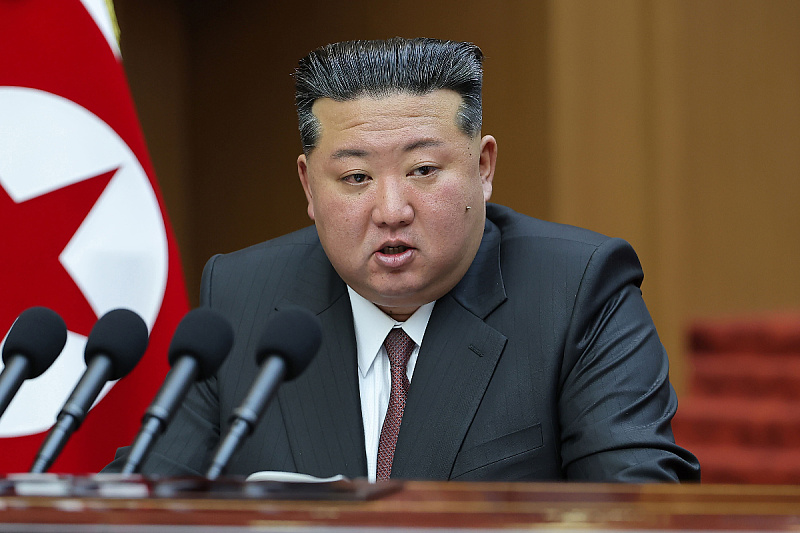
North Korea launched several short-range ballistic missiles towards the sea on Wednesday, in its second missile test in two days, the South Korean military announced, just hours after a senior official from Pyongyang hurled harsh insults at Seoul's hopes for warmer relations.
ingestion