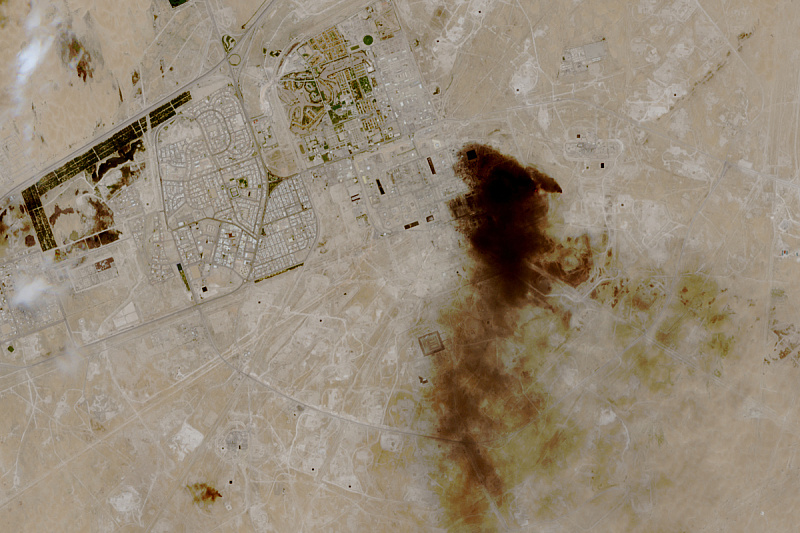
According to official data from the Ministry of Energy, approximately "700,000 barrels per day" have been destroyed, or about ten percent of the country's total exports. "These attacks included a pumping station on the vital East-West oil pipeline, leading to a loss of roughly 700,000 barrels per day in pumped volume through the pipeline, which is the main route for supplying global markets during this period," it was stated. The announcement noted that among the targets was a pumping station on this strategic oil pipeline, directly resulting in a reduction in the amount of oil being transported to the port of Yanbu on the Red Sea. This route gained additional significance after Iran took control of the Strait of Hormuz, restricting maritime traffic through one of the world's most important oil arteries. The damage is not limited only to transport capacity. Saudi authorities confirmed that major oil fields and processing facilities, including Manifa and Khurais, were also attacked, where production was reduced by an additional 600,000 barrels per day. Simultaneously, key industrial centers such as Jubail, Ras Tanura, Yanbu, and Riyadh were also affected, directly impacting the export of refined products. This is Riyadh's first official confirmation of the attacks, but it did not specify who launched them. They also warned that continued strikes of this nature could lead to supply disruptions, further destabilize the market, and slow global economic recovery. Confirmation of the attack followed the European Space Agency's release of footage showing large clouds of thick black smoke above Saudi Aramco's facilities in Abqaiq.
Society
Saudi Arabia confirms attack on key oil pipeline: Approximately ten percent of the country's total exports destroyed.
Attacks on Saudi Arabia's key energy infrastructure have severely shaken the kingdom's capacities after the "East-West" oil pipeline, one of the most important routes for exporting oil to global markets, was hit.
ingestion