The newly announced easing of sanctions is the latest in a series of moves by the United States to recognize Rodriguez as the legitimate authority in Venezuela, since the U.S. military arrested her predecessor Nicolas Maduro and his wife in the capital Caracas on January 3. The couple was then transferred to New York, where they face drug trafficking charges, and both have pleaded not guilty. The decision allows Rodriguez to more freely collaborate with American companies and investors. Without explicitly mentioning the sanctions that affected her, Rodriguez expressed hope in a statement for improved relations between the U.S. and Venezuela. "We appreciate President Donald Trump's decision as a step toward normalizing and strengthening relations between our countries. We believe this progress will enable the lifting of existing sanctions against our country, so we can build and guarantee an effective bilateral cooperation agenda for the benefit of our people," she posted on her Telegram channel after the Treasury Department's announcement. Rodriguez and her brother Jorge Rodriguez were placed under U.S. sanctions during Trump's first term for their alleged role in undermining democracy in Venezuela. The siblings, along with other members of Maduro's inner circle, were added to the Treasury Department's blacklist in September 2018, several months after Maduro won a new term in elections widely condemned by the international community as a sham, as opposition politicians and parties were barred from participating. "Maduro gave Delcy Eloina Rodriguez Gomez and Jorge Jesus Rodriguez Gomez high-ranking positions in the Venezuelan government to help him remain in power and consolidate his authoritarian rule," the U.S. Treasury Department stated at the time. However, the current Trump administration decided to cooperate with Delcy Rodriguez instead of the Venezuelan political opposition after Maduro's ouster. Since then, she has led Venezuela's collaboration with the administration's phased plan to turn the country around, presenting her oil-rich nation to international investors and opening it to private capital, international arbitration, and increased oversight. Last month, the administration recognized her as the "sole head of state" of Venezuela during a civil proceeding in a U.S. federal court. The U.S. has already lifted sanctions on key sectors of the Venezuelan economy. In March, the Treasury Department issued a broad license allowing the state oil company Petróleos de Venezuela S.A. (PDVSA) to directly sell Venezuelan oil to U.S. companies and on global markets, marking a significant reversal after years during which Washington largely blocked dealings with the Venezuelan government and its oil sector. Meanwhile, Maduro remains the legal president of Venezuela. In the hours following the January 3 operation, the Supreme Court, loyal to the ruling party, declared his absence "temporary," effectively eliminating the need for swift elections and retaining the protections his position affords under international law. The court ordered Rodriguez to assume the duties for up to 90 days, with the possibility of an extension to six months if approved by the National Assembly, which is also controlled by the ruling party and presided over by her brother. The 90-day period expires on Friday.
Society
SAD lifts sanctions against Venezuela's acting president Delcy Rodriguez
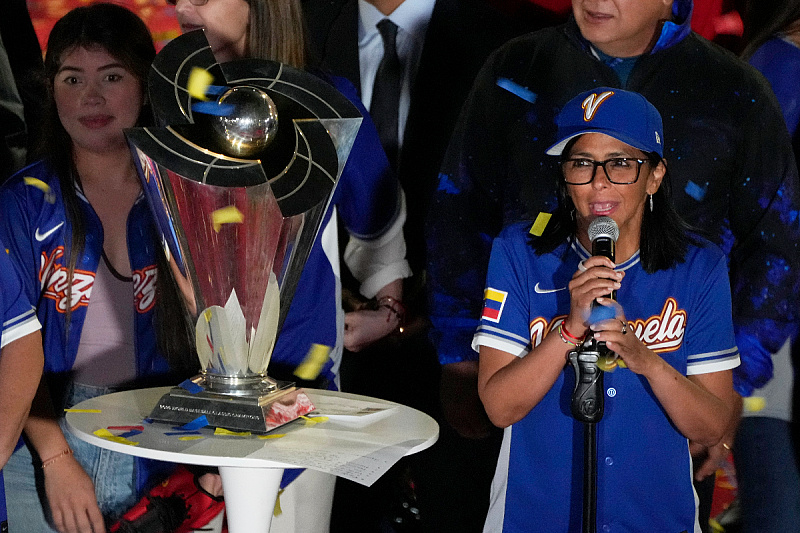
The United States on Wednesday lifted sanctions on Delcy Rodriguez, the acting president of Venezuela, according to data from the Office of Foreign Assets Control (OFAC) published on the website of the U.S. Department of the Treasury.
ingestion