Everything happened just a few hours after a U.S.-brokered ceasefire took effect, raising a dangerous question: Did Abu Dhabi decide to act independently and attack Iran on its own?
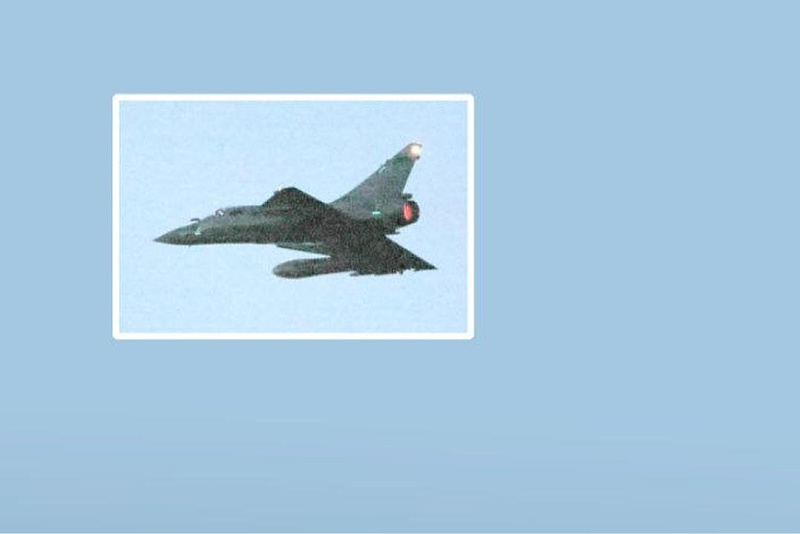
The situation in the Gulf is boiling over again. According to very interesting claims from Iranian military sources, Mirage 2000-9 fighter jets operated by the UAE Air Force participated in the attack on an oil refinery on Iran's Lavan Island.
What gives this story particular weight are reports stating that the United States urgently contacted Tehran to emphasize that the U.S. and Israel had no connection to these strikes. Such distancing by Washington further fuels suspicions that the Emirates unilaterally violated the newly established ceasefire, acting as an independent offensive player in this broader regional conflict.
Suspicion Falls on Abu Dhabi
Official Abu Dhabi has still neither confirmed nor denied these accusations. However, the UAE Ministry of Defense had earlier confirmed that their Mirage jets were airborne that morning but claimed their role was purely defensive—intercepting incoming Iranian drones and missiles.
However, photographs circulating on social media, as well as analyses from intelligence circles, suggest a different scenario. A key, still unanswered question arises: Were these same defensive flights used for an offensive mission and a covert strike on Lavan Island?
The Powerful "Mirage" and a History of Covert Operations
The Mirage 2000-9 is the most advanced export variant of this Dassault aircraft, and the fleet operated by the Emirates represents the technological pinnacle of this model. The jets are equipped with high-resolution radars, integrated electronic warfare systems, and, most importantly, Black Shaheen cruise missiles capable of precision strikes from a safe distance. Lavan Island lies well within the comfortable operational range of these aircraft.
Beyond technical capabilities, analysts point to the UAE's past practices. The UAE already has a history of conducting covert airstrikes it never officially acknowledges. A 2019 United Nations investigation concluded that the bombing of a migrant center in Libya was most likely carried out by a foreign-owned Mirage 2000 belonging to the UAE, which Abu Dhabi never admitted. Therefore, many believe the attack on the Iranian refinery could be a "reprise" of such tactics.
Iran's Swift and Fierce Retaliation
The circumstances of the attack were enough to provoke immediate fury from Tehran. Iranian state television explicitly called the strike on Lavan a "cowardly enemy attack" and a direct violation of the ceasefire. Immediately afterward, a swift and fierce retaliation followed.
Within about an hour, Iran launched massive attacks using drones and missiles on UAE territory, as well as neighboring Kuwait.
The Kuwaiti Armed Forces reported engaging as many as 28 Iranian drones. The targets were oil facilities, power plants, and water desalination infrastructure in the south of the country, with significant material damage recorded.
The UAE's air defense simultaneously intercepted ballistic and cruise missiles, as well as drones. Debris from intercepted missiles fell on the Habshan gas complex in Abu Dhabi, causing large fires.
Unmanned aerial vehicle activity was also recorded over Bahrain, with two citizens reporting minor injuries from shrapnel in the Sitra region.
If it is confirmed that the Emirates indeed violated the fragile ceasefire on their own and without the American green light, it could permanently change the dynamics of alliances in the Gulf and drag the entire region into a new, unpredictable wave of violence.