Simultaneously, deliberate Israeli attacks on Lebanon threaten to provoke a response from Iran, which could lead to the complete collapse of the agreement, while American commentators accuse Israel of attempting to sabotage Trump's peace deal.
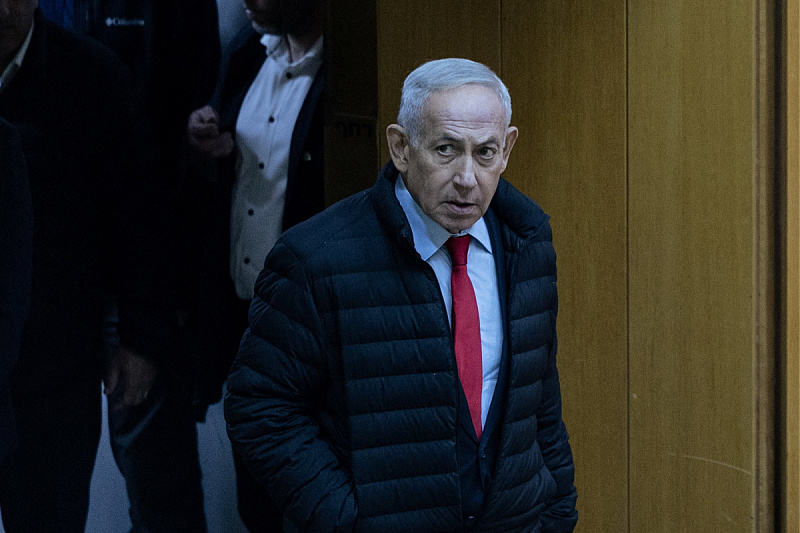
Continued Israeli bombardment of Lebanon, parallel to the ceasefire between the U.S. and Iran, has exposed deep internal divisions within Israel. High-ranking political officials are openly questioning both the ceasefire itself and the strategy of Prime Minister Benjamin Netanyahu.
Opposition leader Yair Lapid described the outcome of the negotiations as unprecedented. "In our entire history, there has never been such a political disaster," Lapid wrote, adding that Netanyahu "suffered both a political and strategic failure."
Criticism is particularly directed at the fact that Israel was completely excluded from the U.S.-Iran agreement. Lapid emphasized that Israel "was nowhere near the negotiating table," warning that the country has become "a protectorate state receiving instructions over the phone."
Minister for Diaspora Affairs Amichai Chikli also expressed dissatisfaction. "I think it was a mistake to agree to a ceasefire at this moment," Chikli said, adding that in such conflicts, enemies should be brought "to their knees." He estimated there is only a "50 percent chance" that the ceasefire will hold, though he insisted that "Iran has lost its status as a regional power."
Former Deputy Chief of Staff Yair Golan called the ceasefire a "strategic failure," while former Finance Minister Avigdor Liberman warned that this agreement gives Iran "an opportunity to regroup," predicting a future conflict "under significantly more difficult conditions."
Attacks on Lebanon and Harsh American Criticism
Completely excluded from the peace negotiations between the U.S. and Iran, Israel is currently launching fierce attacks on Lebanon. According to the latest data, at least 254 people have been killed, with over 1,000 injured. Some estimates suggest the death toll in a single day could approach 300. The scale and intensity of these attacks, which involve operations at multiple locations, have raised significant concerns among observers about possible escalation.
This turn of events has also provoked sharp reactions from American political commentators. Former director of the U.S. National Counterterrorism Center Joe Kent stated in early April that Trump's negotiations were yielding results, but "Israel forced this war by attacking Iran."
"Israel needs this war... We need peace," Kent conveyed.
Conservative political commentator Tucker Carlson went a step further, airing a segment in which he claims "Netanyahu is launching a terrorist attack on Beirut, destroying Trump's ceasefire," and suggested the U.S. should "immediately distance itself from Israel."
Despite a barrage of criticism from multiple sides, some Israeli officials continue to highlight achievements on the battlefield. Minister Chikli concluded that the war has created a "new reality" on multiple fronts, confidently describing the military results achieved with "yes, yes, and yes."