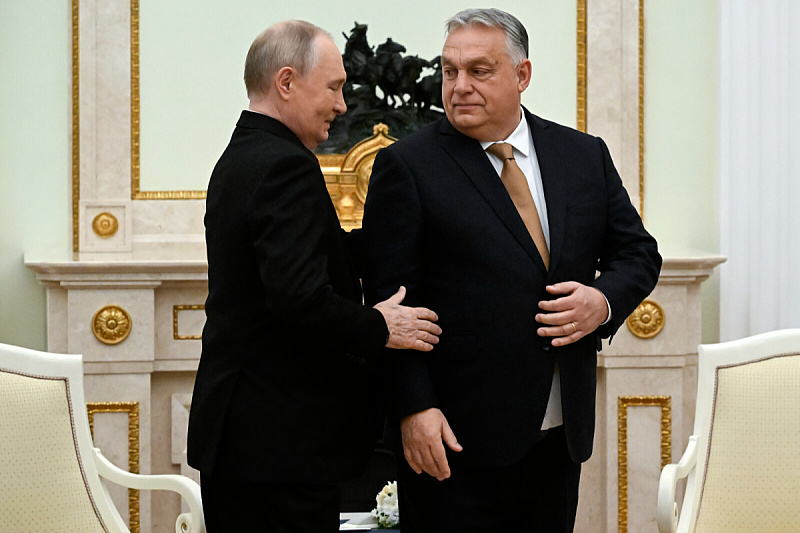
Kremlin spokesman Dmitry Peskov stated that Moscow views the initial messages from Magyar with cautious optimism. "For now, we can note with satisfaction, as far as we understand, his readiness for pragmatic dialogue. We also have such readiness on our side, and we will proceed further in accordance with the concrete steps of the new Hungarian government," said Peskov. A day earlier, Moscow did not send congratulations to Magyar on his electoral victory. Instead, Peskov emphasized that Hungary no longer holds a special status but is now categorized among "unfriendly countries," along with the rest of Europe. Nevertheless, the scale of Orbán's defeat forced the Kremlin to acknowledge the loss of a key partner. "Hungary has made its choice. We respect that choice," said Peskov. In an attempt to mitigate political damage, the Kremlin further relativized its relations with its former ally. "We were never friends with Orbán," Peskov stated, adding that Moscow remains open to building mutually beneficial relations with Budapest. On the other hand, in his first post-election statements, Magyar conveyed that a dramatic rupture in relations with Russia is not expected. He announced the continuation of a pragmatic foreign policy, including the purchase of Russian energy resources, while also balancing relations with the West. "We cannot change geography," said Magyar, highlighting the need for Hungary to find sustainable solutions for energy imports, including Russian sources. According to estimates, Hungary still heavily depends on Russia, which supplies over 80% of its fossil gas and oil, giving Moscow long-term influence. However, Magyar made it clear that he will not follow Orbán's policy toward the Kremlin, especially regarding the war in Ukraine. He unequivocally labeled Russia as the aggressor. "If Vladimir Putin calls, I will answer. If we were to speak, I would tell him it would be good to stop the killing and end the war after four years," Magyar stated. In contrast, Orbán maintained close relations with Putin for years, often blocking or softening European Union measures against Russia, including sanctions and aid to Ukraine. The election result in Hungary also resonated on the streets of Budapest, where citizens celebrated with chants of "Ruszkik, haza" ("Russians, go home"), a slogan from the 1956 revolution. Political analysts believe this development is a serious blow to the Kremlin. Alexander Baunov of the Carnegie Foundation assessed that Orbán's replacement will further solidify the view in Moscow that reliable partners are exclusively authoritarian regimes. "In Moscow, the conclusion is that only truly authoritarian systems can be reliable partners, while hopes that the West could resemble Russia are illusory," Baunov noted. He added that this lesson applies not only to Hungary but also to other political figures, including Donald Trump, whom some Russian analysts believe does not represent a long-term guarantee of political stability.
Society
Russia revoked Hungary's "special status" and stated: We have never been friends with Orban.
On Tuesday, the Kremlin attempted to downplay the significance of the electoral defeat of long-serving Hungarian Prime Minister Viktor Orbán, while signaling readiness for "pragmatic dialogue" with the newly elected leader Péter Magyar.
ingestion