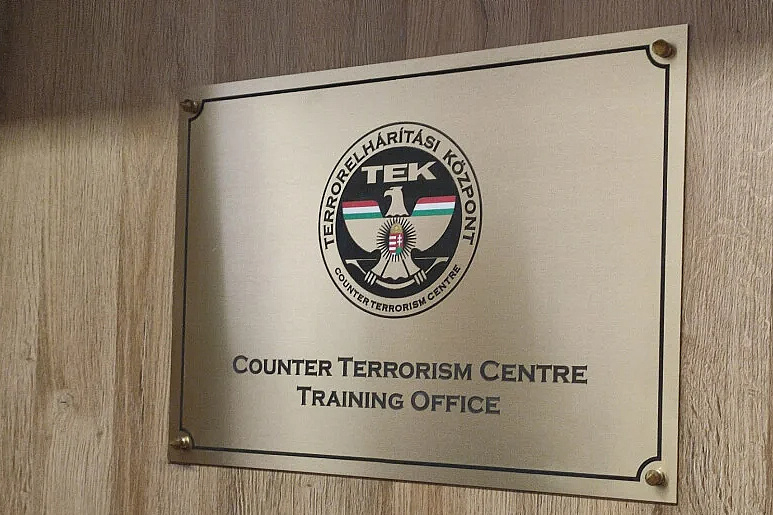
In that regard, the closure of the Hungarian Ministry of Interior's Counter-Terrorism Center office in Banja Luka could be one of the first moves. A little over a year ago, during the peak of the crisis with the arrest of Milorad Dodik, a contingent of the Hungarian Ministry of Interior, specifically the special police unit TEK, arrived in Bosnia and Herzegovina. At the time, the arrival of the unit, which in 2018 evacuated North Macedonian Prime Minister Zoran Zaev, was understood as an extended hand to save Milorad Dodik, just days before the first-instance verdict was announced. Today, the day after the opposition's victory in Hungary, led by Péter Magyar, more and more people believe that the Hungarian ship will turn 180 degrees in relation to pro-Russian proxies in the region and Europe. The special police unit TEK is trained to combat terrorism, hybrid threats, and any type of threat recognized as such by Viktor Orbán. Speaking of a "country with two million Muslims" alongside constant calls for European unity against Islamic radicalism, for Viktor Orbán, Bosnia and Herzegovina was a source of security threats. To cut off this source, to the mutual satisfaction of the Republika Srpska entity and the Hungarian government, cooperation between special police units was established. The formal crowning of this cooperation, after several joint exercises by Hungarian special forces on the territory of the Republika Srpska entity, was completed with the establishment of the Hungarian Ministry of Interior's Counter-Terrorism Center office. On that occasion, the director of the Hungarian Ministry of Interior's TEK, János Hajdu, stated that terrorism represents the ultimate extreme point of radicalization. "For law enforcement agencies, especially counter-terrorism services, to adequately respond to all the challenges posed by terrorism, ordinary cooperation alone is not enough. It is necessary to exchange different approaches and experiences, familiarize each other with professional areas, and consider professional issues of mutual interest," Hajdu told RTRS. On the other hand, the agreement between the entity authorities and Hungary on establishing the Counter-Terrorism Center office was contested by independent delegate in the House of Peoples of the Parliamentary Assembly of Bosnia and Herzegovina, Zlatko Miletić. According to him, cooperation and joint training are not contentious if they are in accordance with signed agreements. "There is no problem with joint exercises and training with foreign police agencies; the Federation has such agreements, but they must follow the rules and procedures that must be respected. However, the decision to organize such exercises must go through state institutions. No one can forbid any cooperation if it is within these legal frameworks. However, regarding the Hungarian TEK unit, I believe that the procedures prescribed by our law were not followed. Therefore, I think this is not good and that it undermines mutual trust between police agencies in Bosnia and Herzegovina, and, God knows, trust between individual agencies," Miletić stated for Klix.ba. If the election result does not change significantly, Magyar is expected to take over the reins of power in Hungary in about 30 days. However, given the first reactions of Milorad Dodik, in which he does not hide his dissatisfaction with Orbán's electoral defeat, the first moves of Budapest towards Bosnia and Herzegovina could be accelerated.
Society
First test for Magyar in relations with BiH, will he abolish the TEK police unit office in Banja Luka
Announcements of a shift in Budapest's foreign policy will soon be put to the test in regional countries where Viktor Orban's policies have supported pro-Russian parties and narratives.
ingestion