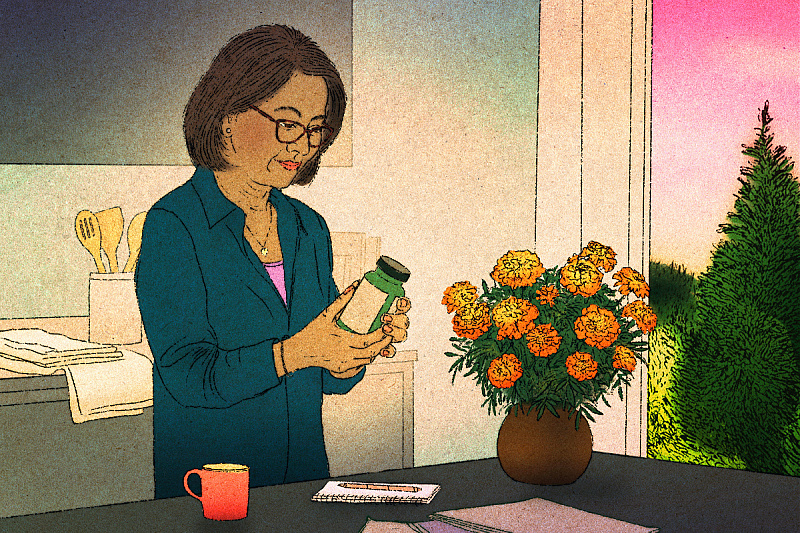
More open conversations about menopause and the period preceding it, known as perimenopause, are accompanied by a strong surge in marketing fueled by social media. Women are confronted with lotions, serums, and light masks promising a youthful appearance for the face and neck, dietary supplements that supposedly boost mood and alleviate hot flashes, and various devices promising help with symptoms.
"Marketing has become very, very aggressive. It's everywhere," says Nanette Santoro, a specialist in gynecology and obstetrics and a professor at the University of Colorado Anschutz. Santoro and other physicians emphasize that before women spend a lot of money on products with big promises, it's important to talk with a doctor about what is actually proven to help and what could be harmful. "It really pays to be very, very, very skeptical," says Santoro.
As menstruation wanes, women's levels of estrogen and progesterone decline. For some women, symptoms can include hot flashes, night sweats, mood changes, vaginal dryness, and sleep disturbances. Angela Angel, a gynecologist at Texas Health Presbyterian Hospital in Dallas, says that in the past, doctors would ask women around age 50 during their annual check-up if they noticed any symptoms. Today, she says, patients themselves schedule special appointments and initiate the conversation. At these check-ups, she adds, many of her patients tell her they've already tried something. "They come to me because it wasn't effective or because it caused some other side effect," says Angel.
Her hospital recently launched a support group for menopausal women led by physicians, and at the participants' request, one of the upcoming sessions will be dedicated to navigating the flood of advertisements and products. Products aimed at women in this life stage range from bracelets and rings that supposedly alleviate hot flashes to cooling covers and bedding.
Santoro says she advises patients to weigh how much they will spend against whether it can really help them. "If it's a $20 bracelet, that's not a big expense. It might bring some improvement. Things that aren't well-studied might work, but if you want something we know works, come back, I'm not going anywhere, and I'll give you evidence-based therapy," she conveyed. Santoro notes that dietary supplements have not been proven in multiple quality studies to alleviate hot flashes, but many are inexpensive and have low potential for harm. If a patient wants to try something she saw online, it's important, she says, to at least inform her doctor so she can be monitored while taking it or be warned to stop.
Physicians point out that most over-the-counter products, like supplements, shampoos, or skincare preparations advertised for menopausal women, often aren't significantly different in composition from regular products for the same purpose, and some products can have side effects. Monica Christmas, director of the menopause program at University of Chicago Medicine, says there isn't a single symptom that all women have. Some have little or no discomfort, while others are strongly affected by a wide range of symptoms. The most important thing, she emphasizes, is to seek medical help.
Doctors stress that hormone therapy prescribed by a doctor can help with symptoms, as can certain non-hormonal prescription medications. Some women should avoid hormone therapy due to previous health problems. "Not everyone needs hormone therapy, not everyone is a candidate for hormone therapy, nor should everyone be on hormone therapy," says Angel. Regular physical activity and a healthy diet can also significantly help, doctors note. This can also facilitate weight loss, which is associated with a reduction in hot flashes and night sweats. Santoro adds that avoiding alcohol is a good step for women with hot flashes because it can further worsen symptoms. "Many symptoms actually improve over time, so sometimes it's really about lifestyle changes, self-care, and simply getting through this most turbulent period," says Christmas.
For Brandi McGruder, a 49-year-old school librarian from Dallas, it became clear she was in perimenopause last year when she went out for a birthday dinner. When she and her friends entered a steak restaurant, she was freezing, and 20 minutes later, she was burning up from the heat. She says she then scheduled a doctor's appointment, who prescribed an estrogen patch that helped her. McGruder says she has seen advertisements for products aimed at women her age, but her first step was going to the doctor. She adds that she doesn't like how the symptoms harshly reminded her she's aging, but at the same time, she tries to embrace this life stage. Her message is: "Laugh. It's all okay. Reach out to others going through the same thing as you, don't take everything too seriously."
"Skin changes come with both age and menopause, when the skin becomes thinner due to the loss of collagen and part of the hyaluronic acid that supports it," explains Melissa Mauskar, a dermatologist and associate professor at UT Southwestern Medical Center in Dallas. Mauskar says that using a prescribed retinoid or over-the-counter retinol can help. Both stimulate collagen production and reduce visible wrinkles. She adds that good skin moisturizers can also be found in drugstores. She advises choosing those that contain ceramides, which help retain moisture in the skin. "However, you don't want anything with too many additional ingredients—just because something is natural and plant-based doesn't mean it's better. Many of these ingredients are actually contact allergens that can make the skin more sensitive," warns Mauskar.
Oral collagen is among the products advertised to women, but she warns that studies on its effectiveness are mixed and that ingesting it doesn't mean it will end up in your skin and plump your face, even though manufacturers claim so. Light masks, she says, won't harm and some studies show they can help, but they don't bring change overnight. To see improvement, they would probably need to be used daily for years. She also emphasizes that sun damage is one of the main reasons patients have more wrinkles, so regular use of sunscreen is essential for all age groups.
"I think a lot of new, fancy things are emerging specifically targeted at perimenopausal and menopausal patients, but sometimes the tried-and-true methods, for which we at least have scientific evidence, are still my gold standard for patients," says Mauskar.