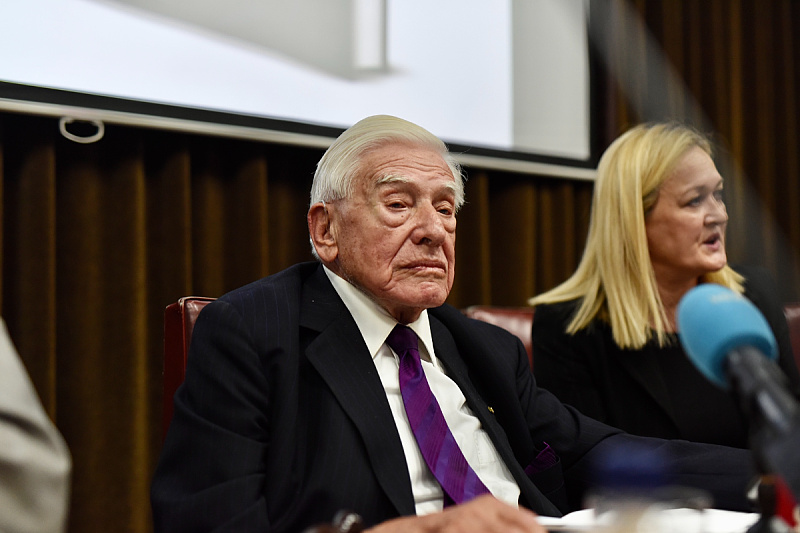
This German politician, born in 1930 in Innsbruck, Austria, was a significant figure within the Christian Democratic Union (CDU) for decades. He built his career in Germany as a long-serving member of the Bundestag and from 1982 to 1992 headed the postal and telecommunications department in the cabinet of then-Chancellor Helmut Kohl.
Schwarz-Schilling is primarily remembered by the Bosnian public for his moral stance in 1992. At that time, he decided to leave his ministerial post in the German government, openly protesting against the passivity and flawed policy of the international community regarding the war events in Bosnia and Herzegovina.
After leaving high-level German politics, he shifted his focus entirely to the Balkans. Through humanitarian work, and roles as an international advisor and mediator, he loudly appealed to the West to take a more active role in stabilizing our country. His mission was clear – encouraging political compromise and building strong, functional BiH institutions.
His official diplomatic return to BiH came in 2006 when he replaced Paddy Ashdown as High Representative. His stay in Sarajevo lasted until 2007 and was marked by a major shift in OHR policy.
Unlike his predecessor, who often used the Bonn Powers, Schwarz-Schilling was guided by the philosophy of "less interventionism, more domestic responsibility." His idea that domestic leaders must take the helm of the state themselves sparked numerous debates, and this more lenient approach remains the subject of varied and often divided assessments in the Bosnian public today.
After completing his diplomatic mission in Sarajevo, Schwarz-Schilling devoted himself to consultancy work, primarily in the telecommunications sector, and continued to monitor and analyze international political relations.