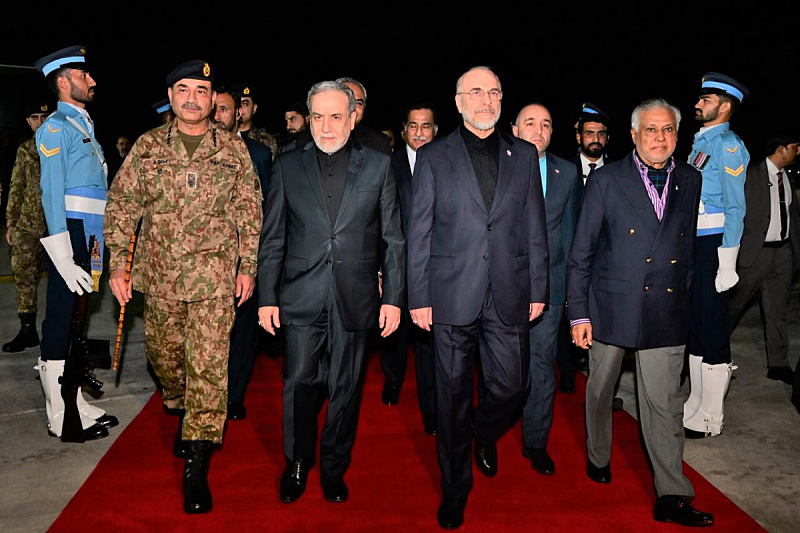
According to an analysis by the prestigious Washington Post, the U.S. administration is now betting that economic pressure and complete isolation will achieve what bombs could not. "The meeting went well. We agreed on most points, but on the one truly important one, the NUCLEAR issue, we did not," Trump stated shortly after the conclusion of negotiations in Pakistan. Following this statement, a shocking move ensued: the announcement of a blockade of the Strait of Hormuz to pressure the U.S. into securing a "better deal." Many analysts immediately began speculating that the failure of the Islamabad negotiations means the United States is plunging deeper into another "forever war" and that the talks were merely a prelude to a new, significantly more dangerous phase of conflict. However, as David Ignatius writes for the Washington Post, citing sources close to the negotiations, the current stalemate does not necessarily mean a return to war.
Economic Strangulation Instead of Ground Invasion The blockade is a pressure tactic, but primarily economic rather than military. Sources claim that Trump has no appetite for further armed conflict, aware that the benefits are limited and the risks enormous. His real goal is to place an already severely shaken Iran into economic strangulation and test whether Iranian leaders will agree to a completely new, comprehensive deal. "If you can't solve a problem, enlarge it." This advice, often attributed to former U.S. President Dwight D. Eisenhower, appears to have become Trump's primary strategy. Given that the Iranian regime has survived weeks of intense bombing and still holds strong cards in the form of remnants of its nuclear program, Trump has opted for an offer that could be called a "Tiffany deal": a massive and attractive package of economic benefits, including the lifting of sanctions, in exchange for Iran's complete abandonment of its nuclear and missile programs and an end to funding proxy groups.
Ghalibaf as a Potential Leader of a New Iran? The talks in Islamabad began sharply, with U.S. Vice President JD Vance and Iranian Parliament Speaker Mohammad Bagher Ghalibaf taking the lead. After long hours of discussion, Ghalibaf impressed the American team as a refined and professional negotiator, as well as a potential leader of a new Iran. Ghalibaf has been trying for two decades to position himself as a pragmatic alternative to Iran's hardline clerics, and U.S. officials believe that other Islamic Revolutionary Guard Corps (IRGC) functionaries are now opening their secret channels because they want to secure a place in the country's future. The situation in Iran, according to U.S. assessments, is extremely dire. The country is experiencing a military version of a "COVID lockdown," with very little economic activity after 40 days of war. Trump's plan is to tighten the economic squeeze even further now, like a UFC fighter holding an opponent in a "chokehold" and waiting for them to "tap out," or surrender. The working title for this strategy in Washington could be described as "Operation Economic Epic Fury." The White House has realized what critics have long warned: wars in the Middle East are easy to start but very difficult to end.
Three Possible Scenarios The Trump administration currently foresees three possible developments as U.S. economic pressure intensifies. The first is the collapse of the regime, which Washington believes is now more likely than before, now that the bombing has stopped. The second, more realistic scenario is the "Golden Bridge." Ghalibaf or some other new leader decides to cross what Trump's team calls the "golden bridge" into a new future by accepting the American deal. And the third is military escalation. If hardliners in the IRGC decide to break the blockade or launch new attacks to extract American concessions. The third scenario carries the greatest risk. If Iran attempts to use military force, Trump could be drawn into an escalation of armed conflict that he is trying with all his might to avoid.
Washington's Goal Washington's goal remains to convince Ghalibaf and his associates that Iran must transition from a revolutionary "movement" threatening the entire region to a stable state that can modernize quickly and profitably, following the example of its neighbors like Saudi Arabia and the United Arab Emirates. Although it is always wiser in the Middle East to bet against such optimistic outcomes, the images from Islamabad at the beginning of the week, where the U.S. vice president and an Iranian leader negotiated the outlines of a possible peace throughout the night, carried with them a sense of both impossibility and inevitability.