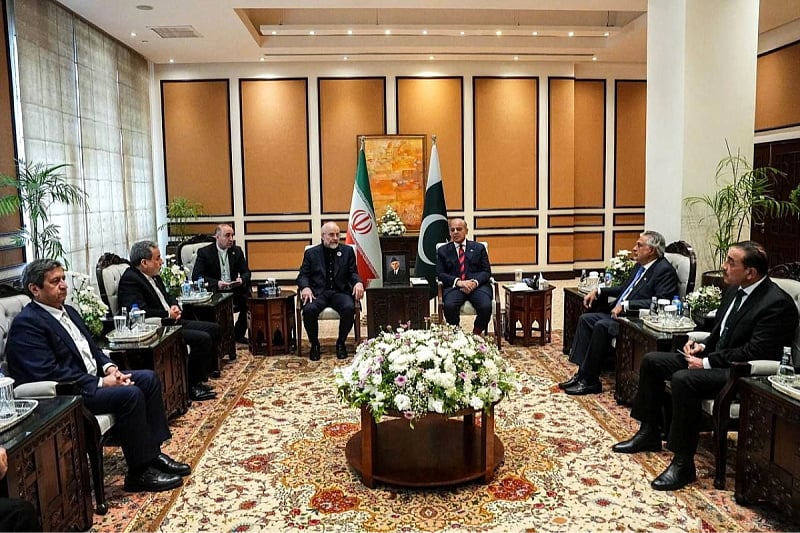
According to available information, the negotiations began over six hours ago and there are still no signs of their conclusion, nor have any official statements been released or press conferences held.
Although there are no official details, Iranian media suggest that there are serious obstacles in the negotiations. Sources close to Tehran's negotiating team claim that the American side has put forward "unacceptable demands," particularly regarding the Strait of Hormuz and other issues. Similar assessments are reported by semi-official and state media in Iran, which state that Washington is taking an "excessively rigid approach" in this round of talks.
Nevertheless, the fact that Iran and the U.S. are holding direct face-to-face talks after nearly half a century of hostility, marked by recent armed conflicts, represents a significant shift. Negotiations are also taking place at a technical level, with the participation of experts from both sides.
Progress is possible, according to analysts, thanks to the high level of the delegations and their negotiating mandates, as well as the apparent willingness of Washington and Tehran to continue the dialogue.
Iran reportedly arrived in Islamabad with pronounced distrust of diplomacy, after previous attempts to negotiate with the U.S. in the past and current year failed due to wartime developments. For this reason, it insisted on talks with high-ranking American officials, including Vice President JD Vance, who is considered an opponent of costly military interventions within the administration of President Donald Trump.
For reference, reaching the 2015 nuclear agreement took as long as 18 months with numerous delays and setbacks, while the current U.S. administration is known for its efforts to achieve results quickly.
One of the key contentious issues remains the Strait of Hormuz, a strategically important passage through which about 20 percent of the world's oil and gas trade previously passed. Iranian military officials have also dismissed U.S. claims about the movement of American warships through this passage, emphasizing that control over vessel transit lies exclusively with Iran.
Parallel to the negotiations, mass protests against the war were held in Tel Aviv, where thousands of citizens demanded an end to the conflict and warned that continued violence would not bring security.
Although the talks are just beginning, diplomats warn that the continuation of the dialogue itself is important, given the risk of renewed escalation in an already unstable region.