Rescue teams, including the U.S. Navy, are already on full standby in the Pacific Ocean waters, awaiting the so-called splashdown. The capsule is expected to reach extreme speeds and temperatures upon re-entering Earth's atmosphere, which will be the final and most critical test of its heat shield before parachutes deploy for a safe descent. The landing is anticipated around two o'clock in the morning local time. NASA and the entire world are closely monitoring every moment of the return. This mission represents a crucial step in NASA's Artemis program, whose ultimate goal is to return humans to the lunar surface and later journey to Mars. The crew who have written new pages in history consist of Commander Reid Wiseman, Pilot Victor Glover, and Mission Specialists Christina Koch and Canadian Jeremy Hansen. Koch will be remembered as the first woman, Glover as the first African American, and Hansen as the first non-American to travel into deep space and reach lunar orbit. During the ten-day journey, the astronauts tested key life support systems in the Orion capsule and flew past the far side of the Moon, providing scientists with invaluable data for the future Artemis III mission, which is expected to include an actual lunar landing. Live coverage of the return is available via NASA's official channels, and all parameters currently indicate the spacecraft is performing exactly as planned. A successful return today will mark the beginning of a new era in space exploration.
Society
Follow live the end of the Artemis II mission: The eyes of the world are on the Pacific Ocean where the astronauts' landing is expected.
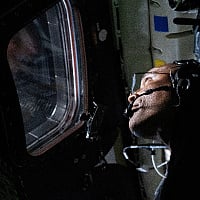
After a historic journey around the Moon, the four-member crew of NASA's Artemis II mission is returning to Earth. The Orion capsule is descending into the Pacific Ocean, successfully concluding the first crewed mission to lunar orbit in over half a century.
ingestion