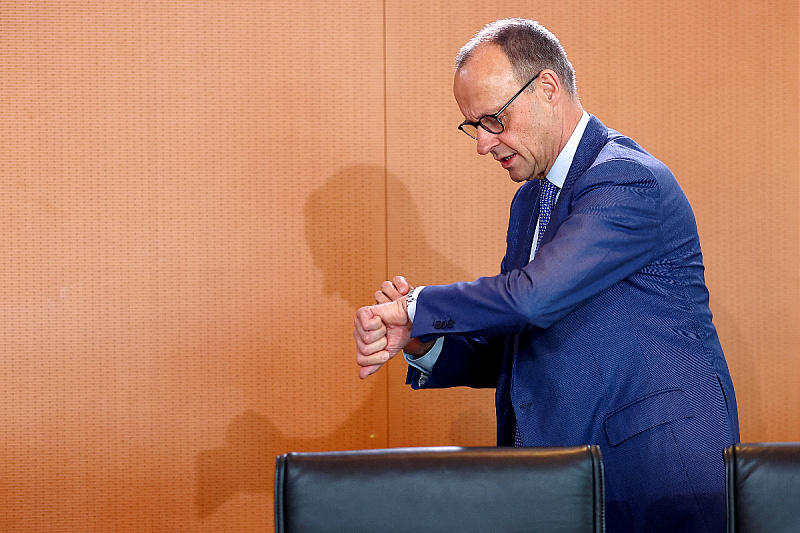
This result, a drop of nine percentage points since the beginning of March, shows that as many as 84 percent of Germans are dissatisfied with Merz's coalition government, composed of his right-centrist Christian Democratic Union (CDU), its Bavarian sister party the Christian Social Union (CSU), and the left-centrist Social Democratic Party of Germany (SPD).
On a personal level, Merz, who became chancellor in May of last year, is faring only slightly better. Only 21 percent of voters say they are satisfied with his performance, just slightly above the record-low rating of his predecessor Olaf Scholz at 20 percent.
These poor results reflect dissatisfaction with a government increasingly marked by missteps and internal tensions.
Merz's tougher approach to migration, including a recent proposal for up to 80 percent of Syrian refugees to leave Germany, has sparked resistance within the coalition itself. His attempts to reach agreements with the Taliban to deport migrants to Afghanistan, as well as the introduction of stricter border controls, have also faced widespread criticism.
Merz, a former businessman, is also failing to win over voters with his economic program. He came to power promising to modernize Germany and spur growth with a 500-billion-euro spending plan, but reforms are progressing slower than expected, and unemployment has risen to 6.6 percent, the highest level in over a decade.
The political consequences of this dissatisfaction are already visible. The CDU suffered a heavy defeat in the regional elections in Baden-Württemberg in early March, and the far-right Alternative for Germany (AfD) is now tied with Merz's conservatives in national polls.
The only consolation for the chancellor is that his party is performing somewhat better than its left-centrist coalition partner. Only 13 percent of Germans support the SPD, and a mere 18 percent back its co-chair, Vice Chancellor and Finance Minister Lars Klingbeil.
The SPD's low rating also reflects their heavy losses in the Baden-Württemberg elections, where they secured just 5.5 percent of the vote, as well as their defeat in Rhineland-Palatinate after 35 years in power.
These poll results bode ill for both the SPD and the CDU ahead of the regional elections in eastern Germany, where the AfD leads in the polls. Pressure is mounting on the chancellor to stabilize a government that already appears to be losing the confidence of German voters.