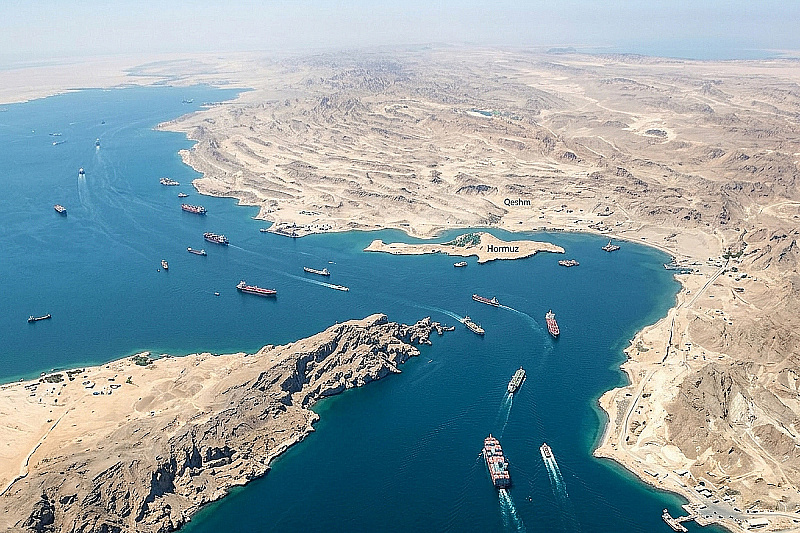
Since Thursday morning, data has shown that large groups of ships remain anchored in the Persian Gulf. According to earlier tracking system data, over 400 tankers, 34 LNG tankers, and 19 LNG vessels are still in the region. Trump earlier stated in a Truth Social post that the Strait of Hormuz would be "open and secure." Previously, Iran's Islamic Revolutionary Guard Corps (IRGC) claimed that navigation through the waterway was halted following Israeli bombing in Lebanon, which Tehran characterized as a violation of the ceasefire. Since the ceasefire was declared, a small number of ships have passed through the strait, including the Greek vessel "NJ Earth" and the Liberian ship "Daytona Beach." Before the war, an average of 107 cargo vessels passed through the Strait of Hormuz daily. Experts warn that it will likely take some time before a larger number of ships can transit the strait. "This is a situation where it's mostly watch and wait. There can't be a full rush to exit. Each ship must obtain special permission to pass through the strait. As a result, whether there will be priority for Gulf states, American ships, or anyone else returning through Tehran," said Simon Kaye, global director of reinsurance for NorthStandard. Due to new tensions, oil prices have slightly increased, by about three percent, compared to yesterday when it was announced that a two-week ceasefire agreement had been reached. However, it remains below $100 per barrel, hovering around $97.
Society
Maritime traffic through the Strait of Hormuz "is at a standstill": Hundreds of ships anchored in the Persian Gulf
MarineTraffic data shows that ship traffic through the Strait of Hormuz remains minimal, more than a day after U.S. President Donald Trump announced a two-week ceasefire between the United States and Iran.
ingestion