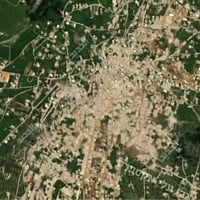
The published video shows an aerial view of Al-Khiam, with rapid cuts documenting the tragic transformation of this area. In the upper left corner, dates clearly track the progression of destruction from March 3 to April 13, 2026.
In just 40 days, green spaces, densely populated areas, and complete urban infrastructure were turned into grayness, craters, and unrecognizable ruins. The footage bears witness to the brutality of an air and artillery campaign that spared no civilian structures.
Strategic Target and Bloody Ground Battles
Al-Khiam is not a random target. It is a town located on high ground providing a strategic advantage in southern Lebanon. Since the start of the Israeli ground invasion in mid-March, this area has become the scene of the fiercest direct clashes between Israeli troops and Hezbollah fighters.
During March, it was recorded that Israeli forces deliberately destroyed a local mosque in a civilian settlement with explosives, while daily air and artillery strikes continued with the same intensity into April. In addition to residential buildings, the town's infrastructure has been completely paralyzed.
Recall that the current conflict escalated drastically on March 2, 2026. After the U.S. and Israel launched operations against Iran, which resulted in the death of Iranian Supreme Leader Ali Khamenei, Hezbollah began mass rocket attacks on northern Israel in retaliation. This was the trigger for the current Israeli air and ground offensive on Lebanon.
The goal of the Israeli military, as stated by some officials, is to create an emptied "security zone" from the border all the way to the Litani River, penetrating about 30 kilometers deep into Lebanese territory.
The cost of this war for Lebanon is enormous. According to data from the Lebanese Ministry of Health, more than 2,089 people have been killed in Israeli attacks so far, including 252 women, 166 children, and 88 medical workers. Nearly 7,000 have been injured, while over a million citizens have been forced to flee their homes.
As towns like Al-Khiam turn to dust and ashes, a historic diplomatic drama is unfolding in Washington. Representatives of the Lebanese government and Israel, mediated by U.S. Secretary of State Marc Rubio, have sat down at the negotiating table for the first time since 1993.
While official Beirut desperately seeks a truce, hoping to regain control of its own territory and distance itself from Hezbollah, Israel currently categorically refuses a ceasefire with this militant group. Israeli officials state they will not stop operations until Israel's northern border is secured, leaving southern Lebanon at the mercy of further destruction.