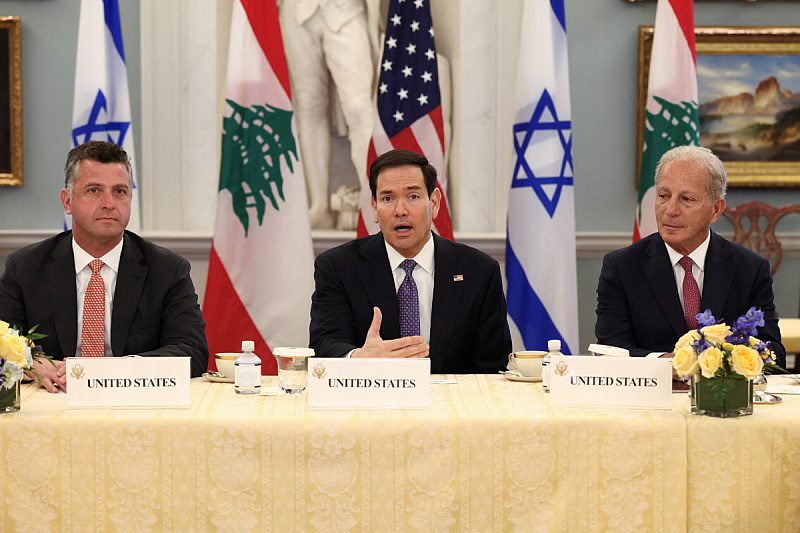
The United States is mediating negotiations, attended by Lebanese Ambassador to the U.S. Nada Hamadeh, Israeli Ambassador to the U.S. Yechiel Leiter, U.S. Secretary of State Marco Rubio, U.S. Ambassador to Lebanon Michel Issa, and State Department advisor Michael Needham.
These talks represent the first such bilateral engagement between the two countries since 1993. However, the possibility of progress remains uncertain, and the Hezbollah group yesterday called on the Lebanese government to withdraw from the talks, labeling them "futile."
While Lebanese authorities seek to secure a ceasefire, Israel's goal is the disarmament of the armed group Hezbollah. Key points of the discussions include securing a truce, disarming Hezbollah, and exploring a broader peace arrangement.
Israel is attending the talks with instructions "not to agree to a ceasefire," according to Israeli media reports, while Lebanon considers these negotiations solely as "preliminary meetings."
U.S. Secretary of State Marco Rubio today called these first direct talks between Lebanon and Israel in several decades a "historic opportunity."
"This is a historic opportunity. We understand that we are working against decades of history and complexities that have led us to this unique moment and opportunity here. The hope is that today we can define a framework on which current and lasting peace can develop," Rubio stated.
And while the talks are set to begin, Israel continues its military attacks on Lebanon, which have killed at least 2,080 people.
Tel Aviv previously rejected a ceasefire in Lebanon as part of a broader truce agreement between the United States and Iran.