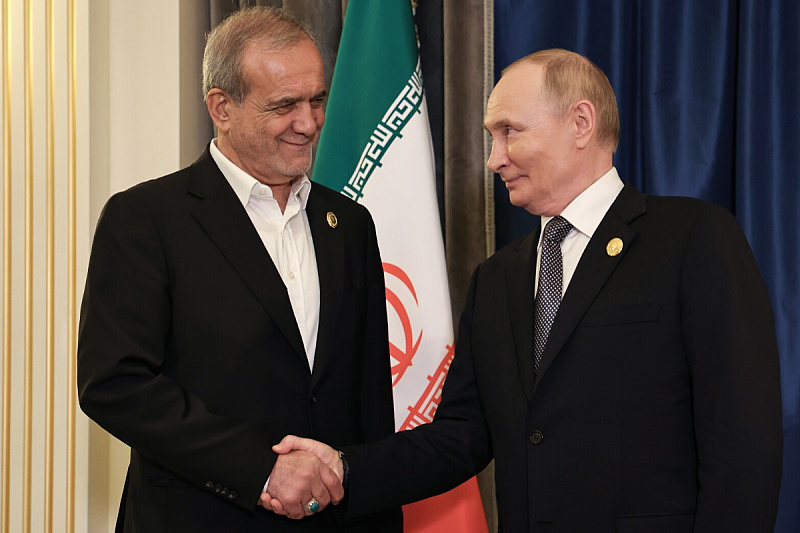
This report, indicating deepening military and intelligence cooperation between Moscow and Tehran, suggests that the shared information enables Iran to carry out precise missile attacks on Israel's energy grid.
According to the findings, targets are divided into three categories based on their strategic importance.
Level 1: Key production facilities. These are locations whose destruction would paralyze the national energy system. The report specifically cites the Orot Rabin power plant as a primary target.
Level 2: Major urban and industrial energy hubs. These facilities are mainly located in central Israel and serve large population centers.
Level 3: Local infrastructure. These targets include regional substations supporting industrial zones, as well as smaller power plants.
Israel as an "energy island"
The Russian assessment of Israel's vulnerability is based on the fact that, "unlike many European nations, Israel's electricity grid is characterized by a high degree of isolation."
Since Israel is a kind of "energy island" that does not import electricity from neighboring countries, Russian intelligence has reportedly conveyed to Iran that damaging just a few central components could cause a complete and prolonged energy collapse. This would lead to massive blackouts and technical failures that would not be easily remedied.
Zelenskyy's warning about the Moscow-Tehran alliance
Ukrainian President Volodymyr Zelenskyy has been increasingly vocal in warning about the Russia-Iran alliance, emphasizing that the "knowledge" Russia has gained on the battlefields in Ukraine is now being exported to the Middle East.
"The Russians helped them, just as the Iranians helped Russia at the beginning of the war with the supply of Shahed drones," Zelenskyy said in a recent interview. "They have gained great knowledge on the battlefield and it is affecting, and will affect, other regions."
Zelenskyy claims that Russia has begun supplying Iran with Shahed-like drones produced on Russian territory. He emphasized that "Russian components" were found in a downed drone in a Middle Eastern country, although for security reasons he did not wish to disclose the exact location.
On the other hand, Ukrainian officials believe the motive behind this intelligence transfer is twofold: to empower its main ally in the region, and to create a new crisis in the Middle East that would divert international attention and resources from the war in Ukraine.
The Russian ambassador also spoke out
Russian Ambassador Anatoly Viktorov responded to these accusations, highlighting the long-standing relations between the two countries.
"Russia and Israel have long established contacts to discuss national security issues. These contacts are intensively maintained between the competent Russian and Israeli agencies, and the most urgent issues have been discussed at the highest level," Viktorov stated.
He sharply denied the report's claims.
"Representatives of the Russian political leadership have repeatedly rejected accusations that our country allegedly provides intelligence data to Iran," he concluded.