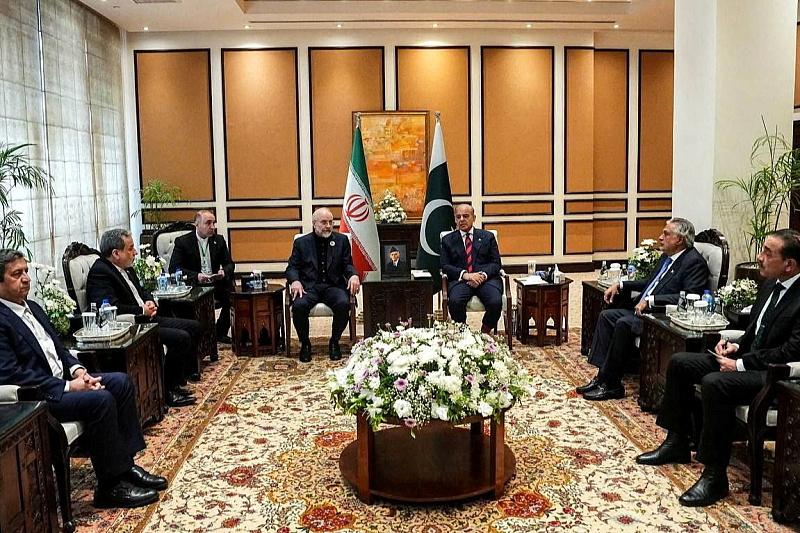
As the clock ticks, Pakistani officials have proposed an urgent second round of negotiations between the U.S. and Iran, to be held before the current ceasefire expires. Two Pakistani officials confirmed to the media, speaking anonymously to AP, that Islamabad is ready to host U.S. and Iranian delegations in the coming days. However, the realization of this proposal will depend on whether the conflicting parties request another location to continue the dialogue. Despite the first round of talks, involving U.S. Vice President JD Vance and Iranian Parliament Speaker Mohammad Bagher Ghalibaf, ending without the most crucial element—a nuclear agreement—Pakistani sources claim it was not in vain. One official emphasized that these negotiations are part of an ongoing diplomatic process, not just a one-time attempt. This aligns with earlier analyses from Washington, suggesting that the U.S. team views Ghalibaf as a pragmatic negotiator and a potential leader with whom the United States could reach a comprehensive "Tiffany deal"—lifting sanctions in exchange for Iran’s complete renunciation of nuclear weapons and funding of proxy groups.
Trump’s Naval Blockade and "Brutal" Strikes While diplomacy seeks a way out, the situation on the ground is intensifying. U.S. President Donald Trump confirmed on Monday that the U.S. military has begun blockading all Iranian ports and coastal areas. With this move, Trump somewhat softened his earlier, more radical threat of a complete blockade of the strategic Strait of Hormuz but simultaneously set the stage for a direct confrontation. Iran immediately responded to this blockade with threats targeting ports in the Persian Gulf and the Gulf of Oman. Shortly after the blockade was set to take effect, Trump issued a sharp warning via social media: any Iranian warship that "even approaches" the U.S. blockade will be destroyed with a "swift and brutal" strike. This tactic is part of the U.S. "Operation Economic Devastation," aimed at economically suffocating Iran, exhausted after 40 days of war, and forcing its capitulation. However, leaving the door open for negotiations, Trump stated just hours after the threats that he had spoken with "the other side," clearly signaling his continued willingness to engage diplomatically to avoid a prolonged ground war.
As the U.S. and Iran, through Pakistan, gauge the pulse for resuming talks, the Israeli military continues its air and ground offensive in southern Lebanon. Intense clashes are ongoing with Hezbollah militants around a strategically important city, while the group simultaneously fires rockets and drones at northern Israel. The complexity of the situation is further highlighted by a statement from a senior Hezbollah official, who categorically declared that this Lebanese militant group will not respect any agreements that may arise from direct negotiations between Lebanon and Israel, which are set to begin today in Washington.