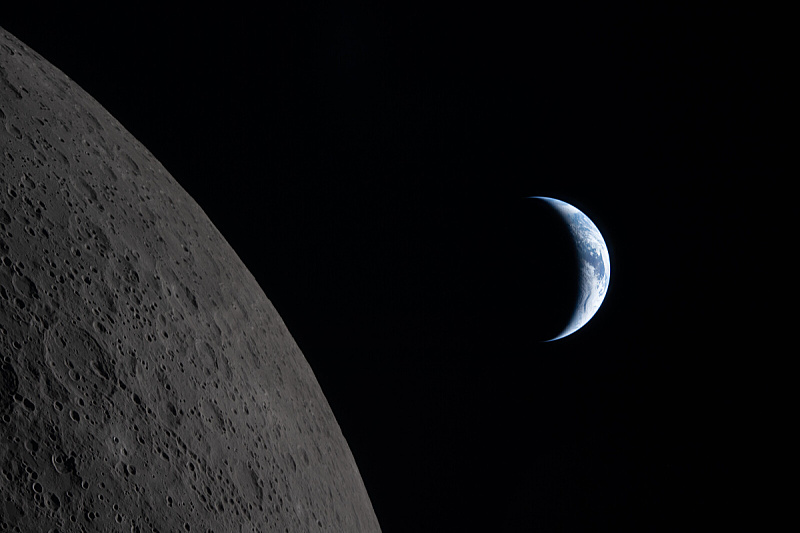
Astronomy professor Derek Buzasi described the period of astronaut isolation as "exciting, in a slightly terrifying way," recalling how the same happened during the Apollo missions of the 1960s and 70s, when we "all held our breath a little." This communication blackout was a key moment during the six-hour flyby around the Moon on the sixth day of the Artemis mission, which has reignited global interest in space exploration. During the flyby, the astronauts captured views of the far side of the Moon, scenes that were too dark or too challenging for Apollo astronauts to capture over 50 years ago. "It amazes me what can now be seen with the naked eye from the Moon. It's simply incredible," said Canadian astronaut Jeremy Hansen. Below are the five most significant moments of the flyby. The four astronauts traveled 406,778 kilometers to the far side of the Moon, breaking the previous record by 6,606 kilometers. Pilot Victor Glover described some peaks as so white that they looked like they were covered in snow. As the capsule passed through the dark side of the Moon, a communication blackout began, lasting 40 minutes. After communication was reestablished, astronaut Christina Koch's first words were: "We will always choose Earth, we will always choose each other." The crew began the special day with a message from the voice of Jim Lovell, commander of Apollo 13, who recorded the message two months before his death last August. "This is a historic day, and I know how busy you will be, but don't forget to enjoy the view," he said in the message. "There is a bright spot on the Moon. We'd like to call it Caroll," said Jeremy Hansen. Wiseman teared up as the Canadian astronaut (Hansen) sent a request to flight control, and then the four astronauts hugged in tears.
Society
These are the five most significant moments of the flyby behind the dark side of the Moon.
"We'll see you on the other side," said astronaut Victor Glover, just minutes before Artemis II lost contact with Earth, flying farther from its home planet than humanity ever has before.
ingestion