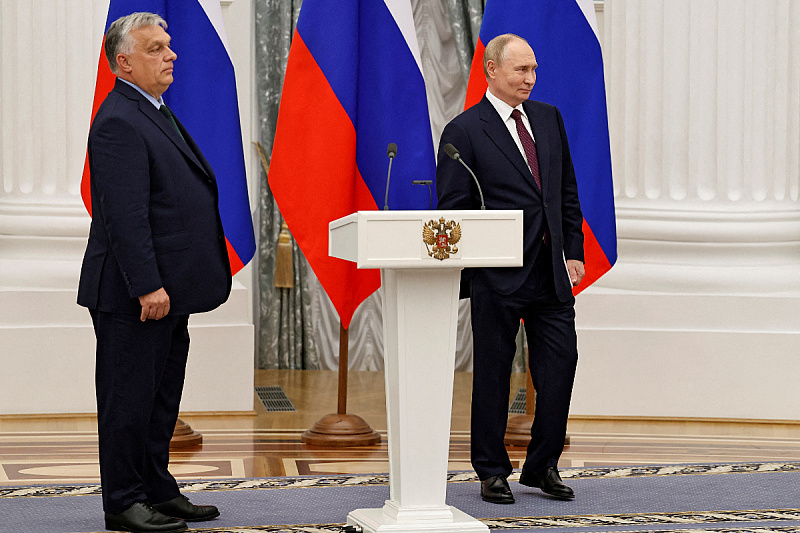
The defeat of Prime Minister Viktor Orbán, a long-standing Russian ally, was initially met with a telling silence in Moscow. On Monday morning, neither the Kremlin nor the Russian Ministry of Foreign Affairs officially commented on Viktor Orbán's electoral debacle. "This will only accelerate the collapse of the EU. In four months, see if I was right," wrote Dmitriev on social media X. He is one of the Russian negotiators for ending the war in Ukraine and a Kremlin envoy for foreign investments. Interestingly, this was not his independent post but a response to the "lament" of the far-right British activist Tommy Robinson over the "fall" of Hungary, as noted by the TASS agency. Dmitriev had previously praised Orbán, calling him "one of the few voices of wisdom and common sense in Europe." He believed that the former Hungarian prime minister understood the gravity of the energy and economic crisis and knew what needed to be done to minimize the damage. The Russian portal RBK recalled his earlier statement that Europe must listen to its "few voices of reason." In the first hours after Orbán's clear defeat, Russian diplomacy had no official stance, and the local media did not devote much space to the change of power in Budapest. However, Dmitry Novikov, deputy chairman of the Foreign Affairs Committee of the Russian State Duma from the Communist Party, assessed that "reality could compel" the new Magyar leader to cooperate with Russia, despite pressure from the EU. Magyar himself, before the elections, did not rule out the possibility of conducting pragmatic negotiations with Moscow. Orbán's government cultivated unprecedentedly close relations with Russia, including a willingness to block EU sanctions against Moscow. This was reflected, among other things, in telephone conversations between Orbán and Russian President Vladimir Putin, as well as between Hungarian Foreign Minister Péter Szijjártó and his Russian counterpart Sergey Lavrov. Recordings and transcripts of these conversations appeared in the media shortly before the Hungarian elections. After counting nearly 99 percent of the votes, Magyar's Tisza party won 138 out of a total of 199 seats in parliament, securing an absolute constitutional majority.
Society
"This will only accelerate the disintegration of the EU": First reaction from Moscow arrives after Orban's election defeat.
The victory of the Tisza party, led by opposition leader Péter Magyar, in Sunday's parliamentary elections in Hungary will only accelerate the disintegration of the European Union, said Kremlin special envoy Kirill Dmitriev.
ingestion