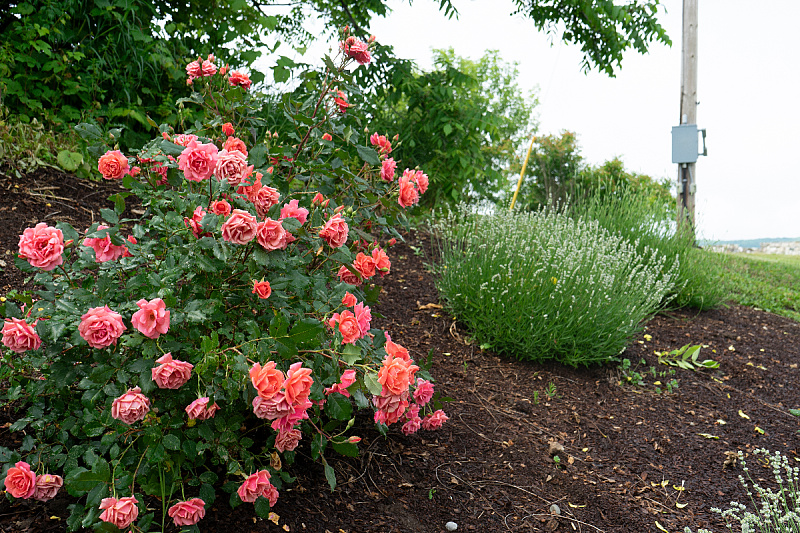
Namely, certain plants can negatively affect the growth and development of roses by depriving them of nutrients, space, or light, which can lead to weaker flowering and plant decline.
One plant not recommended near roses is mint. Although known for its refreshing scent and ability to repel certain pests, mint spreads very quickly and can take over the space around roses. In this way, it deprives them of light and nutrients, while its intense fragrance can overpower the natural scent of roses and reduce their appeal.
Fennel is also a plant better kept away from roses. This plant depletes the soil and reduces the amount of key nutrients needed for proper rose growth. Additionally, it can attract pests and increase the risk of plant diseases, further threatening rose development.
Hydrangeas, although very decorative, have completely different growth requirements. While roses require plenty of sunlight, hydrangeas thrive better in shade, so their proximity can negatively affect rose development and lead to weaker flowering.
Sunflowers are another plant that can pose a problem. Due to their strong and deep root system, they consume large amounts of nutrients from the soil, directly reducing the resources available to roses and hindering their proper development.
Lilac, although often a favorite in gardens, is also not an ideal neighbor for roses. Both plants have developed root systems that require a lot of water and nutrients, putting them in direct competition. Moreover, their susceptibility to the same plant diseases can lead to mutual transmission and additional problems in the garden.
Therefore, by properly arranging plants in the garden, it is possible to ensure that roses remain healthy, strong, and in full bloom throughout the season.