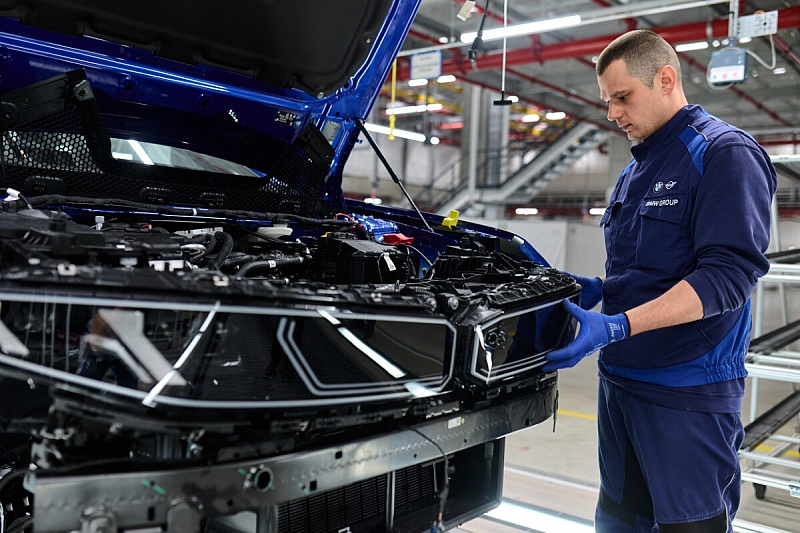
Munich becomes the center for BMW's new generation of electric models, Neue Klasse. This demonstrates how traditional car manufacturers are rapidly transforming their production capacities in line with the global trend of electrification, moving away from facilities once dedicated solely to internal combustion engines.
With an investment of 650 million euros, the German automaker confirmed that the plant will begin series production of the fully electric BMW i3 sedan in August 2026. This will mark the start of the Neue Klasse rollout within the BMW Group's global production network, the automaker announced in a public statement.
The i3 sports sedan is the second model in the Neue Klasse lineup of purpose-built electric vehicles, following the compact iX3 SUV produced in Debrecen, Hungary. Pre-series production of the BMW i3 has already begun in Munich in February, with the plant transitioning to final customer vehicle production in August.
The human factor remains crucial, but the body shop is equipped with 800 industrial robots, handling most joining and assembly tasks with a very high level of automation of around 98 percent. This automation enables precise and efficient production of the new vehicles.
Beyond robots, production is deeply digitalized and supported by BMW's iFactory vision system, which includes digital twin models and advanced AI tools. Artificial intelligence is used for quality control—automatically analyzing images and data at every production step to detect even the smallest defects, improving reliability and reducing waste in manufacturing.
At some other BMW plants, the company is even testing humanoid robots that could work directly alongside people and perform more complex tasks in battery or component production, although these are still in the pilot project phase for now.
However, the i3 sedan will not be the only Neue Klasse model produced in the heart of Bavaria. BMW has announced that the upcoming i3 Touring will also be manufactured at the same plant.