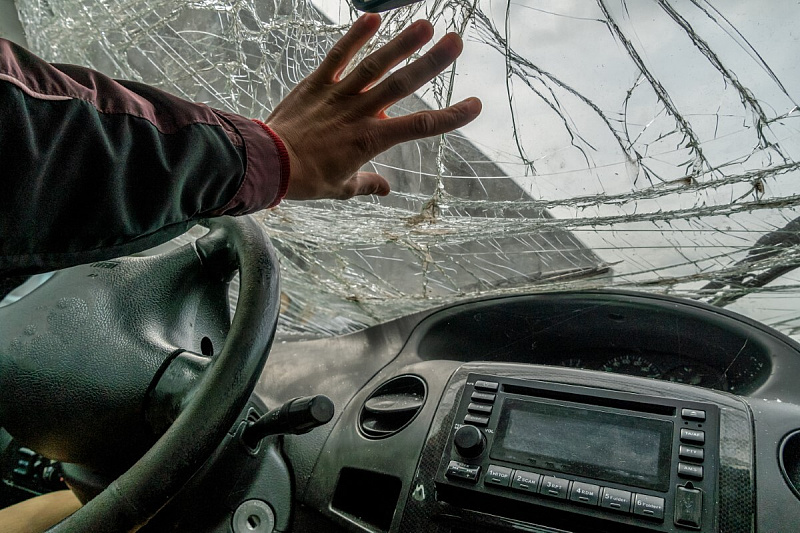
No protection, just a barrier between the driver and the wind, rain, and dust. And that was precisely the problem. Upon impact, such glass would not shatter into harmless pieces but instead broke into long, sharp shards, like blades, straight toward the people inside the vehicle. It was a trap in every car.
The turnaround came between 1920 and 1940, with the emergence of two inventions that changed everything: laminated and tempered glass. Two layers with a plastic film in between allow the windshield to remain in one piece even when cracked, rather than scattering over passengers. Tempered glass undergoes a special heat treatment and crumbles into small, blunt pieces upon impact that do not cut. The logic was simple: if the glass must break, let it break safely.
Over time, the division became clear: laminated for windshields, tempered for side and rear windows. Today, however, even that boundary is fading: laminated glass is taking over the rest of the car, bringing with it heating, sound insulation, and sensors.
But there is also an unexpected irony. Today's glass is, first, part of the car body's load-bearing structure and packed with various technologies. Second, in purely material terms, it is thinner and more fragile than before. The reasons are environmental and commercial.
The problem is not that it cracks more often because of this, but due to something else: modern cars have far more glass surfaces than ever, tires are larger and wider and kick up more stones, and increasingly poor roads, worn by weather, constantly launch "projectiles" toward windshields. More glass, more stones, and more cracks.
This has become the reality on the roads, bringing more work to insurance companies. So, it's not that the glass has become weaker, but that the environment has become more demanding.