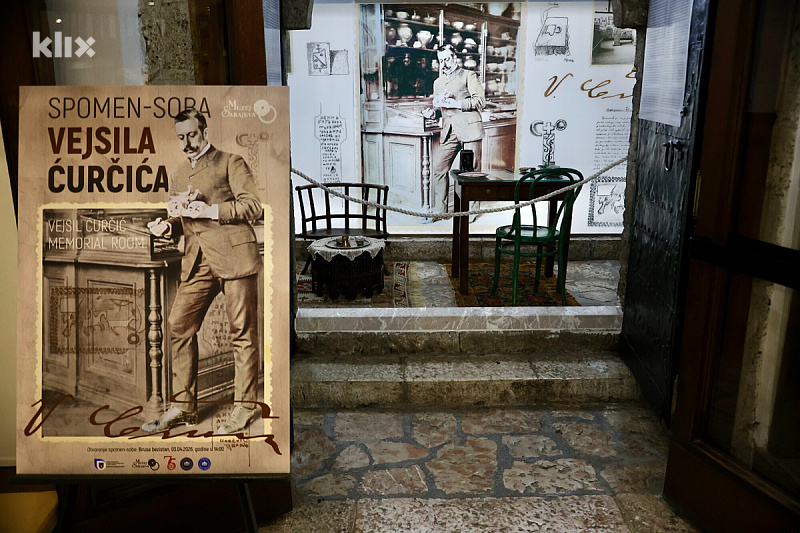
Time has corrected the injustice towards this scientist from the distinguished Sarajevo family Ćurčić, even though he was a man ahead of his time, with immeasurable archaeological achievements, endeavors in many other scientific spheres, in the protection of Bosnian-Herzegovinian heritage, significant museological work, and curatorial activities. "Ćurčić left us with much; he was a pioneer in numerous research fields, a great hard worker, innovator, creator, and guardian of heritage," emphasize representatives from the Museum of Sarajevo. The names of people who saved the Sarajevo Haggadah during World War II are more or less known, but almost no one knows that Vejsil Ćurčić did so, as evidenced by a preserved record from the archives of the National Museum of Bosnia and Herzegovina detailing how and for how long he devotedly cared for the Haggadah. The memorial room is a kind of homage to Vejsil Ćurčić, the authors emphasize, and after a long period of neglect, he has symbolically "returned home." From the descendants of the Ćurčić family, part of the legacy was provided for the memorial room—Vejsil's personal items such as a camera, inkwell and pen, coffee cup, pipe, work desk, original handwritten material for the monograph, and many other room details, including carved tables, family photographs, and carpets. Alongside the memorial room as a permanent museum exhibit, the exhibition "Archaeological Photo Traces of Vejsil Ćurčić" by author Adnan Kaljanac was also opened today. Vejsil Ćurčić left valuable photo documentation of archaeological and monument sites, with some photographs taken from the air. The memorial room was opened in the presence of the Ćurčić family, who donated items and documentation from the legacy of this notable figure in Bosnian-Herzegovinian history and science, a graduate of the University of Vienna. Numerous representatives of Bosnian-Herzegovinian institutions, media, and other dignitaries also attended. From March 31 to today, the Academy of Sciences and Arts of Bosnia and Herzegovina, the University of Sarajevo—Faculty of Philosophy, the Museum of Sarajevo, the Ministry of Culture and Sports of the Sarajevo Canton, and the Ministry of Science, Higher Education, and Youth have been synchronously participating in the implementation of programs dedicated to the first formally educated archaeologist of Bosnia and Herzegovina. The promotion of the monograph "Mene, domaćeg sina" by author Prof. Dr. Adnan Kaljanac, held at the Academy of Sciences and Arts of Bosnia and Herzegovina on March 31, sparked great interest from the academic community and the wider public, as the book documented the entire life and professional path of Vejsil Ćurčić, revealing numerous facts about his discoveries, endeavors, challenges, and injustices that prevented his significant role in archaeological achievements, the preservation of representative artifacts from the National Museum such as the famous Haggadah, and other merits, as well as his contributions in other spheres like the protection of Bosnian-Herzegovinian heritage, significant museological work, curatorial activities in various spheres and historical periods, and the introduction of the first methodological principles and technological innovations in the field of archaeology. By opening the memorial room and the exhibition "Archaeological Photo Traces of Vejsil Ćurčić," the organizers aimed to immortalize the memory of Vejsil Ćurčić as a researcher, tracker, curator, pioneer in many fields of science, stećakologist, historian, archaeologist, and anthropologist.
Society
The Memorial Room of the first Bosnian-Herzegovinian archaeologist Vejsil Ćurčić has been opened as a permanent exhibition of the Sarajevo Museum.
The memorial room of Vejsil Ćurčić (1868–1959), the first graduate archaeologist from Bosnia and Herzegovina and a distinguished scholar whose name was long and unjustly shrouded in oblivion, has been opened as a permanent exhibition of the Sarajevo Museum in Brusa Bezistan.
ingestion