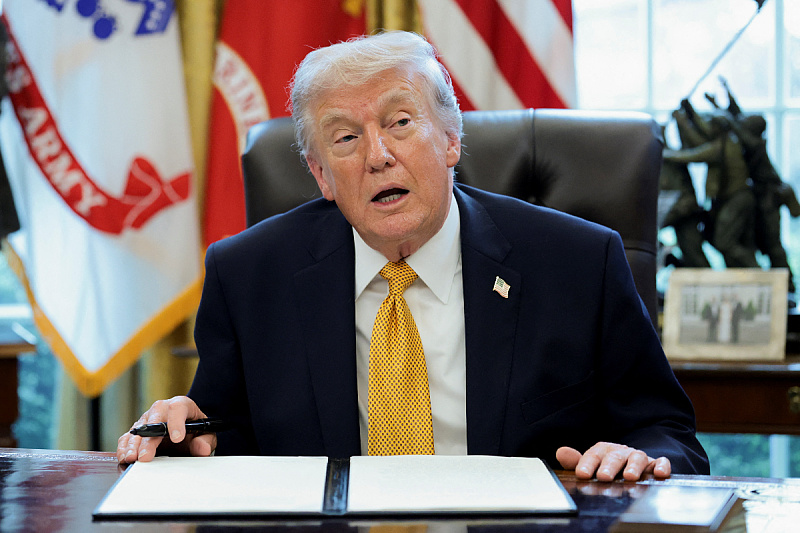
These directives are an escalation of recent tensions between the U.S. and Cuba, which began in January when the Trump administration restricted oil shipments to Cuba as part of a broader campaign to force comprehensive political changes on the communist-ruled island.
The United States and Cuba have acknowledged being in the early stages of trying to find a way out of the crisis, but it is unclear how much each side is willing to compromise.
In March, USA Today reported that the two countries were in talks to sign a potential historic economic agreement that would thaw relations.
Even as the Trump administration's attention shifted to the war in Iran, tensions between Washington and Havana have escalated in recent weeks.
Trump hinted that he expects to soon have the "honor of taking over Cuba, in some form."
"Whether I free it, take it over, I think I can do whatever I want with it," Trump said.
On April 13, Trump told USA Today at the White House that the U.S. military would "stop by Cuba" after finishing the war with Iran. The conflict with Iran is still ongoing, although a ceasefire is currently in effect.
In a recent interview with Newsweek, Cuban President Miguel Díaz-Canel promised that his country could retaliate if the United States launches a military attack.
"We will fight, we will defend ourselves, and if we fall in battle, to die for the homeland is to live," Díaz-Canel said.