The Trump administration has faced intense political and institutional criticism for using religious language to describe military operations. This has raised serious questions about the boundaries between faith, political messaging, and official war policy.
President Donald Trump described the rescue of an American aviator in Iran as an "Easter miracle," a phrase echoed by senior administration officials during Easter Sunday. Treasury Secretary Scott Bessent stated, "The Easter miracle is considered the greatest victory in history," adding that the rescue was fitting for "this holiest Christian day." Meanwhile, Defense Secretary Pete Hegseth posted online, "God is good," and Axios reported that the rescued officer uttered this same phrase over the radio immediately after ejecting.
Mockery of Islam and Threats
In a separate message, Trump combined religious language with threats, warning Tehran to open the Strait of Hormuz or face consequences. He controversially ended his message with the words, "Praise be to Allah."
The Council on American-Islamic Relations (CAIR) strongly condemned this move, calling it a "mockery of Islam and a threat to attack civilian infrastructure." They emphasized that such language is reckless and inflammatory.
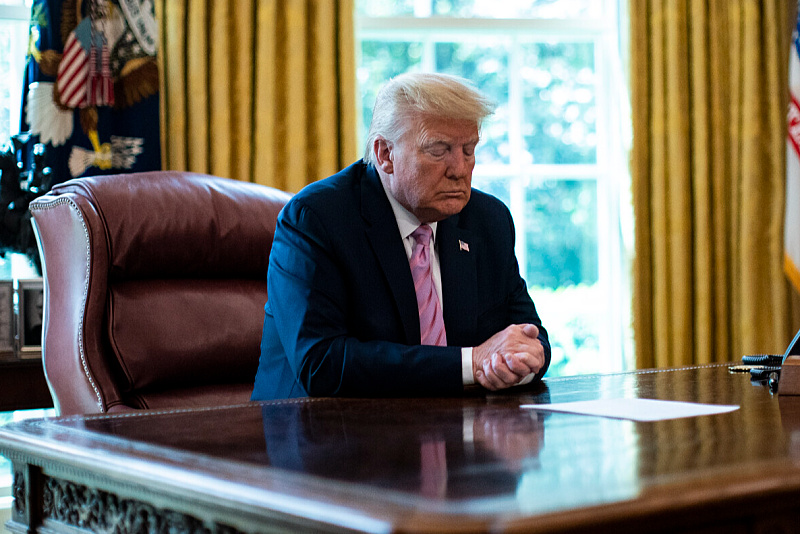
Critics warn that such messaging erodes long-standing norms separating religious expression from official military and wartime communication. This wartime rhetoric comes amid a broader pattern of visible religious engagement within the administration, including regular prayer sessions led by evangelical leaders in the Oval Office. While participants describe these meetings as spiritual support for leadership, critics argue they only heighten concerns about the growing influence of religious narratives on political and military decision-making.
"End Times Prophecies"
A group of 30 Democratic representatives expressed concern last month, sending a letter requesting an investigation into whether "biblical end-times prophecies" are being used to justify military actions. They warned that operations must be guided solely by "facts and the law, not doomsday prophecies."
Prominent U.S. politicians from various camps have sharply criticized this narrative. Senate Democratic Leader Chuck Schumer said Trump is "raging like a deranged madman," while Senator Bernie Sanders called his statements the "ravings of a dangerous and mentally unbalanced individual."
Representative Jared Huffman warned that framing war as a kind of prophecy carries a huge risk of deeply embedding ideological narratives into military operations.
This approach by Trump has also been opposed by radical Republican Marjorie Taylor Greene, who stated that Christians should "strive for peace," not escalation of conflict.
"Our president is not a Christian, and his words and actions should not be supported by Christians. He has gone mad," Greene declared.
Critics ultimately conclude that it is extremely dangerous to use religious symbolism as a weapon during a conflict that has already lasted over a month, claimed thousands of lives, and continuously undermines global peace and stability.