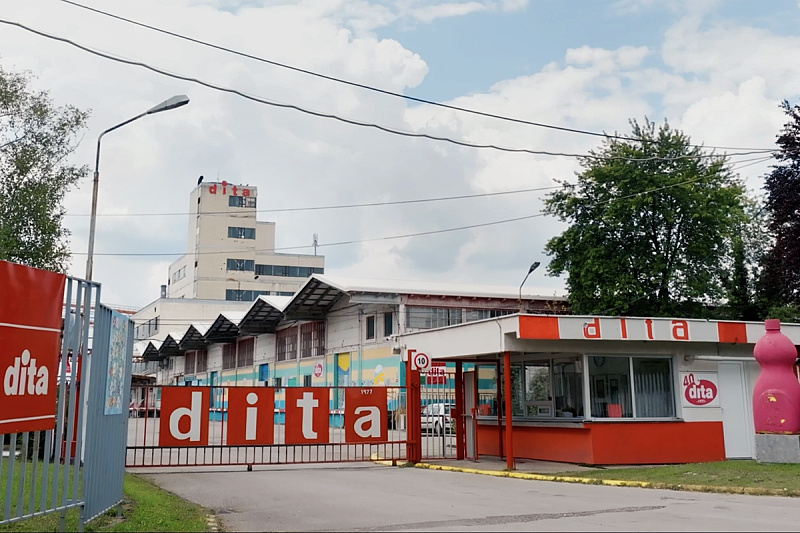
The sentence about the search for that scent, expressed through Đuro's recognizable phrase, does not come across as mere exaggeration or nostalgia for a product that was temporarily absent from the market. It can also be read as a symbolic reference to the journey of the workers of the Dita Detergent Factory, founded in 1977.
Even in the formulation phase for Arix, the factory carefully monitored global trends and analyzed available samples. The goal was to develop a competitive product with a higher share of active components, stronger effectiveness, and a more pronounced scent.
Such an approach was possible within the context of the industrial strength of the time. Dita, as part of the former SodaSo combine, was at one point the fifth factory of its kind in Europe. At its peak, the combine played a key role in the economy of Tuzla and the wider region.
After the war, the factory faced serious financial difficulties. A combination of unfavorable circumstances, including management decisions and changes in ownership structure, led to bankruptcy in 2015.
That very moment marked the beginning of a new phase. Despite the uncertainty, the workers initiated production using remaining resources, aware that without additional support such a model could not be sustained long-term.
The turnaround came through a partnership with the company Bingo, which enabled the stabilization of production, securing of raw materials, and the return of products to the market.
The return to the facilities was accompanied by a strong emotional charge. For many workers, it was not just a continuation of work but also a confirmation of their long-term efforts. One of the more poignant moments involved a worker who spent her entire career at Dita and, after production restarted, once again smelled Arix Tenz in her own home—an experience she felt as both a personal and collective return.
Two years later, Dita became part of the Bingo group. Around 20 million KM was invested in modernization, production capacities were restored, and processes were improved. Today, the company produces over 400 items and is once again present on the market.
Product development, which once relied on following world standards, has been further enhanced with modern technologies and quality control systems. This has positioned Arix and other Dita products as competitive and reliable compared to global brands.
In this context, the message "White smells again" gains broader meaning. For the workers who participated in restarting the factory, it represents not just product communication but also a symbol of continuity, resilience, and trust in domestic industry.