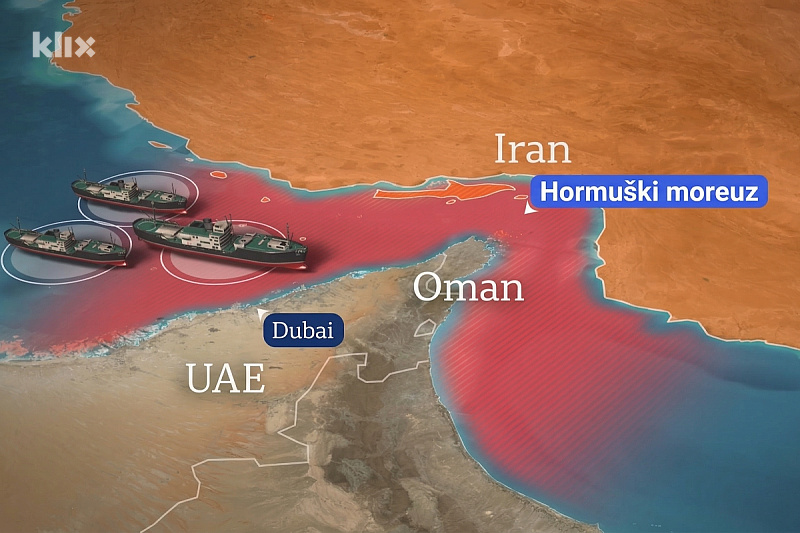
Official Tehran is seeking a permanent end to the conflict on its own terms, which includes the complete lifting of sanctions and the establishment of new rules for the strategically vital Strait of Hormuz.
According to American and Middle Eastern sources, the U.S., Iran, and a group of regional mediators—including Pakistan, Egypt, and Turkey—have held intensive negotiations on a potential ceasefire in two phases. However, Iran’s 10-point response, which the American side has labeled "maximalist," makes it clear that Iran does not agree to partial solutions.
Fear of a "Lebanese scenario" and key demands: Iranian officials have clearly communicated to mediators that they do not want to accept a situation like the one currently seen in Gaza or Lebanon, where a ceasefire exists only on paper, and the U.S. and Israel retain the right to attack whenever they wish.
Instead of a temporary solution, Tehran insists on a permanent agreement that entails: - A complete cessation of all regional conflicts. - The lifting of international sanctions. - Support for the reconstruction of destroyed areas.
The Strait of Hormuz as the main bargaining chip: The opening of the Strait of Hormuz is precisely the central sticking point. Mediators had hoped that in the first phase (during a 45-day ceasefire), Iran would partially open the strait and agree to compromises regarding its stockpiles of highly enriched uranium.
However, Tehran has refused to give up its two biggest bargaining chips in exchange for a mere pause in hostilities. Over the weekend, the Iranian Revolutionary Guard Corps (IRGC) sent a sharp message, stating that the situation in the Strait of Hormuz "will never return" to its pre-war state, and this restriction specifically applies to the United States and Israel.
Trump’s ultimatum and threat of massive strikes: While negotiations continue via text messages between U.S. envoy Steve Witkoff and Iranian Foreign Minister Abbas Araghchi, pressure from the White House is mounting. U.S. President Donald Trump has extended his ultimatum for reaching an agreement until Tuesday evening.
"There is a good chance for a deal, but if they don’t reach one, I’m blowing everything up," Trump threatened.
The White House has confirmed that the military operation Epic Fury continues unabated. According to sources from the Axios portal, operational plans for a massive U.S.-Israeli bombardment of Iranian energy facilities are already prepared. On the other hand, negotiators fear that Iranian retaliation could be catastrophic for the oil and water facilities of Gulf countries.
Mediators have warned Tehran that there is no more time for tactical maneuvering and that the coming hours are the last chance to avoid a dramatic escalation and massive destruction of civilian infrastructure.