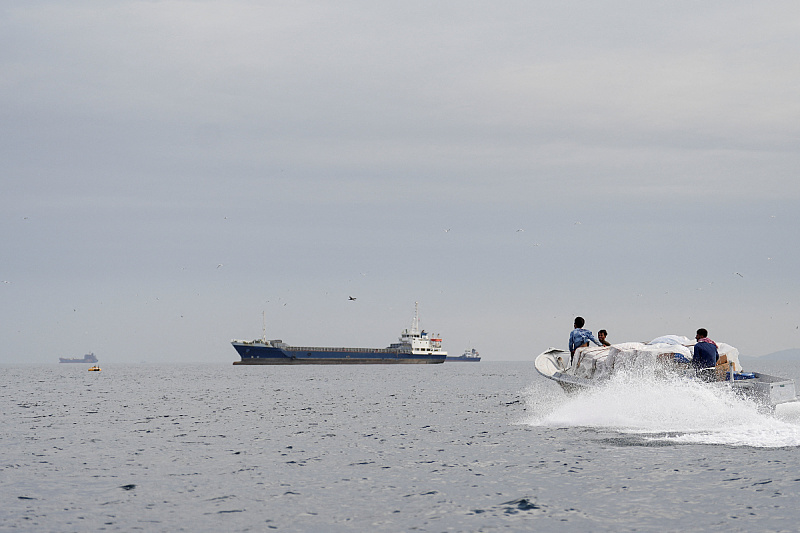
According to sources close to the Iranian authorities, Tehran is considering allowing ships to navigate freely through the Omani side of the Strait of Hormuz without risk of attack, provided a broader agreement is reached to prevent the resumption of conflict.
This proposal comes at a time when the world is suffering the consequences of the largest disruption in global energy procurement in history.
Since the war began on February 28, Iran's halt of traffic through this strait, which handles 20 percent of the world's oil and liquefied natural gas (LNG) flows, has paralyzed the energy market.
Hundreds of tankers and other vessels, along with 20,000 sailors, have been stranded in the Gulf since the war started on February 28. A two-week ceasefire took effect on April 8, and U.S. President Donald Trump stated on Wednesday that the war is nearing its end, but control over the Strait of Hormuz remains a key issue in negotiations.
The source, who wished to remain anonymous due to the sensitivity of the matter, said that Iran might be willing to allow ships to use the other side of the passage in Omani waters without any obstruction from Tehran.
It was not specified whether Iran would also agree to remove any mines it may have laid in that part of the water or if all ships, even those linked to Israel, would be granted free passage.
The source added that the proposal depends on whether Washington is prepared to meet Tehran's demands, a condition that has been crucial for any potential breakthrough in the Strait of Hormuz.
The Strait of Hormuz has operated for decades under a system established in 1968, which divides shipping lanes between Iranian and Omani waters. Since February 28, traffic has almost completely ceased, and the situation escalated further on Monday when the U.S. imposed a complete blockade on oil tankers leaving Iranian ports.