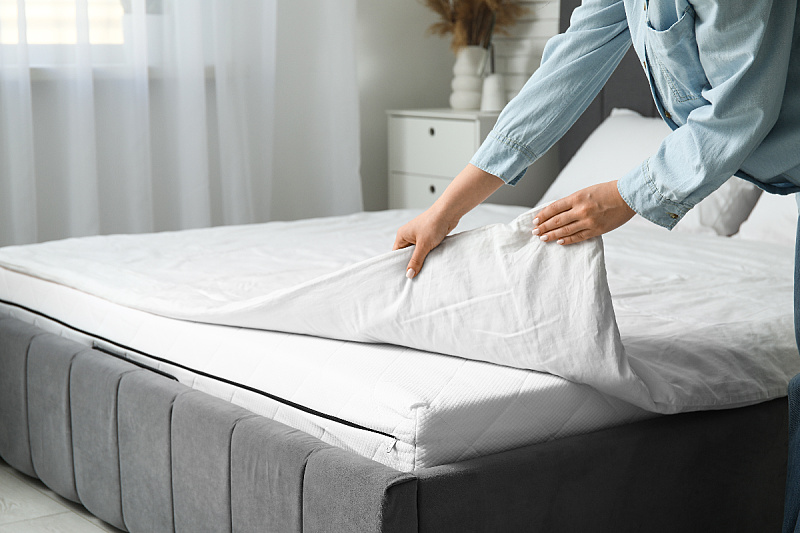
The first step in proper mattress cleaning is a regular routine that includes removing bedding, vacuuming, and treating stains. According to expert guidelines from the Sleep Foundation, mattresses should be vacuumed with an upholstery attachment to remove dust, mites, and allergens, while stains should be cleaned with gentle products and minimal water to prevent material damage. It is also recommended to sprinkle baking soda to neutralize unpleasant odors before vacuuming again. In addition to basic cleaning, experts emphasize the importance of deep cleaning at least twice a year. As noted by Tom's Guide, this practice helps remove accumulated dirt, bacteria, and allergens that settle inside the mattress over time. However, caution is advised. Excessively high steam temperatures or too much moisture can lead to mold growth and damage the mattress structure. One of the key factors in extending a mattress's lifespan is proper maintenance, not just cleaning. Regularly rotating the mattress is recommended to prevent uneven wear and the formation of indentations. Additionally, using a protective cover can significantly reduce the penetration of moisture, sweat, and dirt, thereby preserving the mattress's structure and hygiene. It is important to react quickly to stains and maintain bedding cleanliness. Promptly removing liquids prevents permanent damage and mold growth, while regularly washing bedding reduces the buildup of bacteria and allergens. By combining these habits, it is possible to extend the mattress's lifespan to seven to ten years or more while preserving sleep quality and health.
Society
It's not just a matter of hygiene: How to clean your mattress and extend its lifespan.
A clean mattress is not just a matter of hygiene, but also a long-term investment in sleep quality. Regular maintenance can significantly extend its lifespan and prevent the development of allergens, bacteria, and damage.
ingestion