U.S. Secretary of State Marco Rubio will participate in negotiations in Washington alongside Israeli Ambassador to the U.S. Yechiel Leiter and Lebanese Ambassador to the U.S. Nada Hamadeh Moawad.
At least 2,089 people have been killed in Israeli attacks in Lebanon, according to the Ministry of Health. Among the dead are 252 women, 166 children, and 88 medical workers, while 6,762 people have been injured. Over one million people have been displaced.
The Lebanese government hopes the negotiations will pave the way to ending the war. While Iran has set ending the wars in Lebanon and the region as a condition for talks with the United States, Lebanon insists on representing itself.
Hezbollah and critics are skeptical, believing the government in Beirut has no negotiating power and should leverage Iran's position, a key ally and patron of the group.
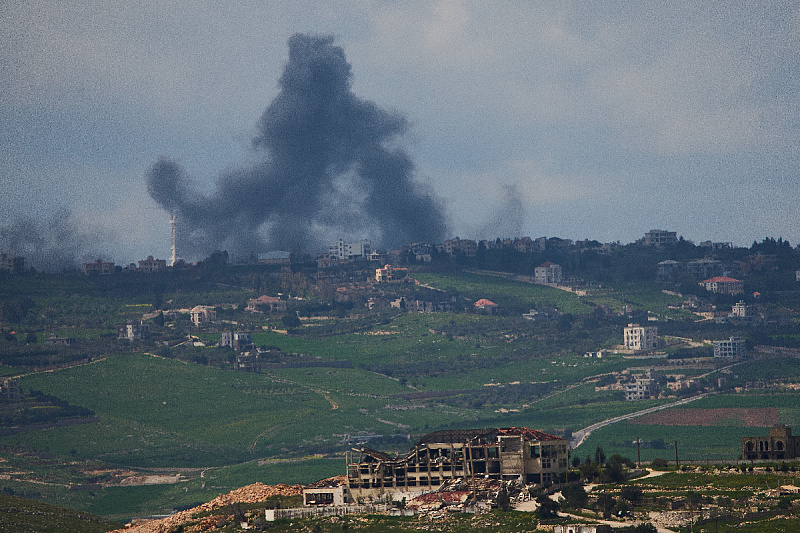
The Israeli military continues its ground invasion of southern Lebanon, which some Israeli officials say aims to create a depopulated "security zone" from the border to the Litani River, about 30 kilometers inland. Iran-backed Hezbollah, though weakened in the last war with Israel that ended in November 2024, still launches drones, rockets, and artillery daily into northern Israel and at ground forces inside Lebanon.
Israeli and Lebanese governments are meeting to discuss ways to ensure long-term security on Israel's northern border and support Lebanon's efforts to take control of its territory and political future from Iran-backed Hezbollah, a U.S. State Department official said.
This will be the first negotiations between the two sides since 1993, according to an official who was not authorized to speak publicly and addressed the matter on condition of anonymity.
Top Lebanese political officials, critical of Hezbollah's decision to fire rockets at Israel on March 2 in solidarity with Iran, quickly proposed direct talks to stop the escalation, hoping Israel would not launch a ground invasion.
Israel did not give a positive response until last week, after carrying out 100 attacks across the country, including the capital of Lebanon itself.
Beirut wants a ceasefire as a precondition for negotiations, similar to talks between the U.S. and Iran mediated by Pakistan.
"Israeli destruction of Lebanese territories is not a solution, nor will it yield any results," President Joseph Aoun said on Monday, who came to power promising the disarmament of non-state armed groups, including Hezbollah. "Diplomatic solutions have consistently proven to be the most effective way to resolve armed conflicts worldwide."
Israel has rejected the possibility of a ceasefire.
"We will not discuss a ceasefire with Hezbollah, which continues to carry out indiscriminate attacks on Israel and our civilians," Shosh Bedrosian, spokesperson for Israeli Prime Minister Benjamin Netanyahu, stated on Monday.
Hezbollah and its supporters are critical, calling these negotiations a free concession to Israel.
Hezbollah Secretary-General Naim Kassem delivered a sharp speech calling on Lebanon to cancel the talks. Hezbollah wants a return to the 2024 agreement, under which negotiations were conducted indirectly, mediated by the U.S., France, and the United Nations peacekeeping mission in southern Lebanon.