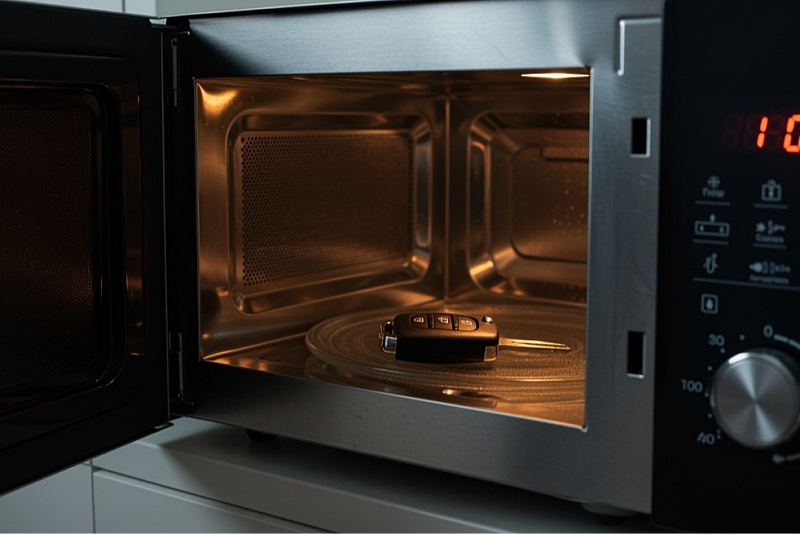
This type of theft works by devices amplifying the signal from a keyless entry fob, meaning a key left inside the house can be used to unlock and start a car parked outside. One attacker captures the signal from the key and boosts it, while another transmits it toward the receiver near the vehicle. The car mistakenly detects that the driver is nearby and automatically unlocks. That's why drivers resort to all sorts of methods, even leaving their keys in the microwave when they park their car and come home. This is a habit that has been written about for some time and is appearing on social media, going viral. What many once saw as progress—the ability to unlock a car via remote on the key or simply by approaching the vehicle with the key—others see as a threat to vehicle security. It has never been easier for thieves to hack and "pick" the lock. That's why car theft cases are on the rise. A microwave is essentially a Faraday cage—a metal box that blocks electromagnetic signals. When you put the key inside and close the door, the metal walls prevent thieves from detecting or amplifying the signal. However, there is a serious risk—if someone accidentally turns on the microwave, you will destroy both the expensive key and potentially the appliance itself. Additionally, key cloning insurance has therefore become a new service offered by insurance companies and automobile clubs in Europe. The insurance covers not only key cloning but also threats like remote vehicle blocking or software recovery after an external attack. All of these are risks that are already becoming part of everyday life.
Society
Unusual habit becoming a trend: Why do some drivers put their car keys in the microwave?
The rise in the number of stolen cars is causing concern among drivers. Insurance companies are already offering key cloning insurance services, and drivers are resorting to all sorts of methods, even leaving their keys in the microwave, to protect their cars from theft.
ingestion